
Planning Indian Groceries in Ghana? A Practical Family Shopping List for Everyday Meals
For Indian families living in Ghana, a useful grocery list should focus on ingredients that support everyday meals rather than simply stocking every familiar Indian product. Atta, rice, dals, cooking oil, basic spices, breakfast staples, tea and a few convenient pantry products can form a strong starting point. Planning groceries around your family’s actual weekly meals also helps reduce forgotten essentials and unnecessary purchases.

What Should an Indian Family Grocery List in Ghana Include?
An Indian family grocery list becomes much easier to manage when it is divided into categories.
Here is a practical starting point:
Grocery Category | Items to Consider | Common Uses |
Flour | Atta, besan, sooji | Roti, paratha, chilla, snacks |
Rice | Basmati, everyday rice | Dal-rice, pulao, biryani |
Pulses | Toor, moong, masoor, chana | Dal, khichdi, curries |
Spices | Haldi, jeera, dhania, chilli | Everyday Indian cooking |
Masalas | Garam masala, recipe-specific blends | Curries and selected dishes |
Cooking Basics | Oil, salt, sugar/jaggery | Daily cooking |
Breakfast | Poha, sooji, tea | Breakfast and refreshments |
Pantry Extras | Pickles, papad, chutneys | Meal accompaniments |
This is not a fixed checklist. Families should adjust quantities and products according to eating habits, household size and cooking frequency.
Which Staples Should Go on the List First?
Start with ingredients that appear repeatedly across your weekly meals.
For many Indian households, atta and rice are two important staples.
Atta can support roti, chapati and paratha, while rice can be paired with dal, vegetables and curries or used for dishes such as pulao and biryani.
When buying Indian atta in Ghana, check the flour type and intended use. Products labelled simply as wheat flour may differ in milling, texture and how they behave when making Indian flatbreads.
Similarly, when selecting rice, do not choose only by package appearance. Check the rice variety, pack size and product information. Basmati may suit certain meals particularly well, while another rice variety may be preferred for everyday cooking.
Which Dals and Pulses Are Useful for a Family Pantry?
You do not need every dal available to build a useful Indian pantry.
Start with the varieties your family eats regularly.
Toor dal can be used for several everyday dal preparations.
Moong dal works well for dal and khichdi.
Masoor dal is another convenient everyday option.
Chana dal can be used across different savoury dishes.
Families that regularly prepare dishes such as rajma or chana can also add kidney beans and chickpeas.
A simple rule is to keep two or three frequently used dals in regular rotation and add speciality pulses only when they appear in your upcoming meal plan.
This approach keeps your grocery cupboard useful without overcrowding it.
Which Indian Spices Should Families Keep at Home?
A practical Indian spice collection does not have to contain dozens of packets.
Begin with spices that work across several recipes:
Turmeric (Haldi) – frequently used in dal, vegetables and curries.
Cumin (Jeera) – useful for tadka, rice and vegetable dishes.
Coriander Powder (Dhania) – commonly used to build flavour in sabzi and gravies.
Red Chilli Powder (Lal Mirch) – useful for adjusting heat and flavour according to the variety.
Mustard Seeds (Rai) – useful for tempering and several regional dishes.
Garam Masala – a versatile blend used in many Indian preparations.
Depending on your family’s cooking style, you can gradually add ajwain, hing, fenugreek, black pepper, cinnamon, cardamom, cloves and other whole spices.
Instead of asking, “Which spices should every Indian home have?” ask, “Which spices do we actually use every week?”
That creates a much smarter shopping list.
What Should You Buy for Indian Breakfasts?
Breakfast ingredients are easy to forget when a grocery list focuses mainly on lunch and dinner.
Depending on your household preferences, you might keep poha, sooji, besan, atta and tea among your regular pantry products.
One ingredient can often serve multiple purposes.
Besan, for example, can be useful for chilla as well as selected snacks and recipes. Sooji can support different breakfast and savoury preparations. Atta is not limited to plain roti and can be used for parathas and other wheat-based meals.
Families should therefore choose breakfast staples based on versatility rather than collecting many separate products.
Which Cooking Basics Should Never Be Forgotten?
Some of the simplest products cause the biggest inconvenience when they unexpectedly run out.
Your recurring list should therefore have a small “check before ordering” section for cooking basics.
Include products such as cooking oil, salt, sugar or jaggery and frequently used seasonings.
Tea may also belong in this category if it is consumed daily in your household.
The purpose of this section is not to purchase these items every week. It is simply to check their remaining quantity before placing your grocery order.
How Can Families Plan Groceries Around Weekly Meals?
One of the easiest ways to improve grocery planning is to stop thinking only in individual products.
Think in meals.
Suppose your family plans to prepare:
Monday: Dal + rice
Tuesday: Roti + sabzi
Wednesday: Rajma + rice
Thursday: Paratha + accompaniment
Friday: Khichdi
Weekend: Pulao or a special curry
Now convert those meals into ingredients.
Dal-rice requires dal, rice and basic spices. Roti-sabzi needs atta, vegetables and seasonings. Rajma-rice adds kidney beans. Paratha may require atta and a suitable filling. Khichdi uses rice and dal.
Suddenly, you can see which ingredients overlap.
Those overlapping ingredients—such as atta, rice, oil, cumin and turmeric—are your genuine family pantry essentials.
Weekly or Monthly Grocery Shopping: Which Is Better?
For most households, a combination can be more practical than treating everything as weekly or monthly.
Longer-lasting dry groceries such as rice, atta, dals and selected packaged pantry products may be planned less frequently when storage conditions and household consumption make that sensible.
Products that are consumed quickly or need frequent replenishment can remain on the weekly list.
The important question is not simply whether a product is “monthly.”
Ask:
How quickly does our family use it?
A large family preparing rotis daily will consume atta differently from a household that makes roti twice a week.
Your shopping schedule should follow consumption.
How Much Atta, Rice and Dal Should a Family Buy?
There is no universal quantity suitable for every family.
Household size matters, but eating habits matter just as much.
Instead of copying someone else’s monthly grocery quantities, review your own consumption for several weeks.
If a particular pack of rice normally lasts three weeks, that gives you useful information for future orders. If a large spice packet remains unfinished for months, consider a smaller pack next time.
This simple habit can help families make more deliberate purchasing decisions.
How Can You Organise an Indian Grocery List Before Shopping Online?
A random list such as “atta, masala, rice, tea” can still result in forgotten items.
Try dividing your list into clear sections:
Need Now: products that are finished or nearly finished.
Running Low: products that may need replenishment soon.
Meal-Specific: ingredients required for meals planned this week.
Optional: snacks, accompaniments or speciality items that are not immediately required.
This also makes online grocery shopping in Ghana easier because you know which products deserve priority before browsing additional categories.
What Should You Check When Buying Indian Groceries Online in Ghana?
When shopping for Indian groceries in Ghana, check the available product information carefully rather than selecting an item based only on a familiar package or brand name.
Review the:
- Product name and description
- Pack size or quantity
- Product variant
- Ingredients where relevant
- Packaging and storage information
- Current availability
- Delivery availability for your location
Similar-looking grocery products may serve different purposes.
Whole cumin and cumin powder, for example, are not the same format. Atta and another wheat flour may behave differently when making roti. A general garam masala and a dish-specific masala are also different products.
A few extra seconds spent reading the listing can make your order much more useful when it reaches the kitchen.
How Can Families Avoid Overbuying Indian Groceries?
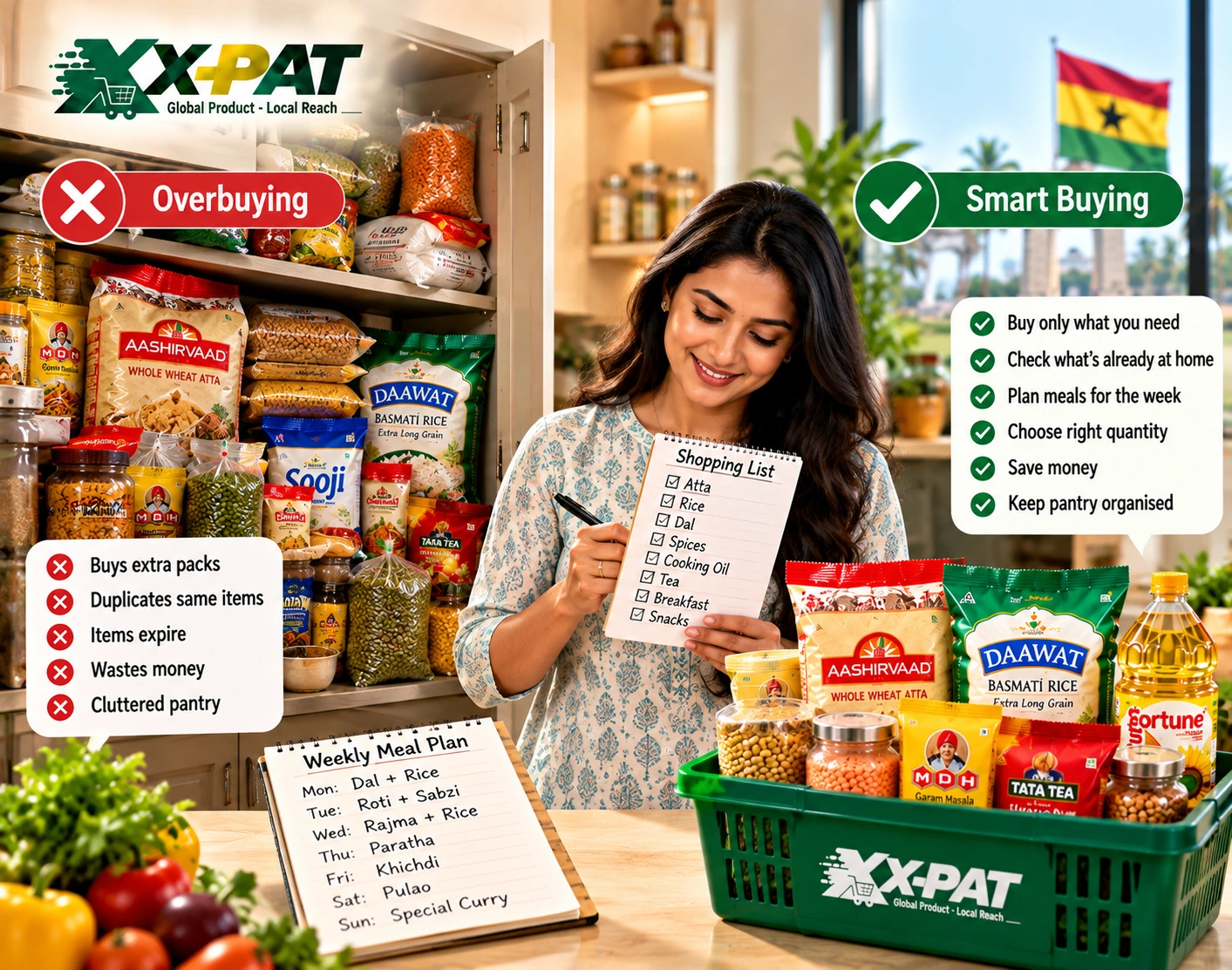
Living away from India can sometimes create an understandable temptation to buy extra quantities of familiar products whenever they are available.
But more stock does not automatically mean better planning.
Before adding another packet, ask three questions:
Do we already have this?
Will we use it regularly?
Can we store it appropriately?
Also check your pantry before placing an order.
Products hidden behind newer packets can easily be forgotten, leading to duplicate purchases.
A simple first-in, first-out approach, while following package dates and storage instructions, can make pantry management more organised.
What Can You Add Beyond the Basic Grocery List?
Once the everyday essentials are covered, personalise your shopping list.
Depending on your family, this might include pickles, papad, chutneys, specialised masalas, snacks, tea or other familiar pantry favourites.
These products can make meals more enjoyable, but they should come after your core cooking ingredients if you are trying to build a pantry gradually.
A useful family grocery basket should therefore have two layers:
Essentials for everyday meals + favourites your household genuinely enjoys.
That balance makes the pantry practical without making it boring.
Where Can Families Explore Indian Groceries in Ghana?
Indian families in Ghana can explore specialist Indian grocery stores, supermarkets carrying international products and online grocery platforms.
For shoppers using X-PAT, the practical approach is to check the current catalogue for available grocery categories, products and pack sizes before planning an order.
Instead of browsing randomly, bring your prepared family shopping list with you.
Start with atta and flour, move to rice and pulses, check spices and cooking basics, then add breakfast items and pantry favourites.
This makes online shopping faster and reduces the chance of remembering an essential ingredient only after completing your order.
A Simple Indian Family Grocery Checklist
Before your next grocery order, use this quick checklist:
Staples: Atta, rice
Pulses: Toor, moong, masoor, chana or family favourites
Spices: Turmeric, cumin, coriander, chilli, mustard seeds
Masalas: Garam masala + frequently used recipe blends
Cooking Basics: Oil, salt, sugar/jaggery
Breakfast: Poha, sooji, besan, tea according to preference
Extras: Pickle, papad, chutney and household favourites
Then add one final question:
“What are we actually cooking this week?”
That question can turn a generic grocery checklist into a useful family shopping plan.
Frequently Asked Questions
What groceries should an Indian family keep at home in Ghana?
Atta, rice, commonly used dals, cooking oil, salt and basic Indian spices provide a practical foundation. Breakfast products and pantry extras can then be added according to the family’s eating habits.
How do I make an Indian grocery shopping list?
Start with your weekly meals, identify ingredients shared across those meals, check what is already available at home and then organise missing products by category.
Which Indian spices should families buy first?
Turmeric, cumin, coriander powder and red chilli are versatile starting options. Mustard seeds and garam masala can also be useful depending on the dishes your family prepares.
Which dals are useful for everyday Indian cooking?
Toor, moong, masoor and chana dal are common choices. Select two or three based on what your household actually eats.
Should I buy Indian groceries weekly or monthly?
It depends on consumption, pack size and storage. Frequently used dry staples may be purchased less often, while products that run out quickly can be checked weekly.