What Should an Indian Kitchen Always Have? A Practical Grocery Checklist for Everyday Cooking
An Indian kitchen becomes easier to manage when it has a balanced selection of everyday staples rather than too many occasional ingredients. Atta, rice, dals, cooking oil, basic spices, salt, sugar or jaggery, tea and a few meal-specific pantry products can cover a large part of regular cooking. For shoppers looking for Indian groceries in Ghana, building the pantry gradually around actual meals is usually the most practical approach.
The goal is not to recreate an entire supermarket at home. It is to keep enough versatile ingredients available so that preparing dal-rice, roti-sabzi, paratha, pulao or a quick snack does not require a new grocery order every time.
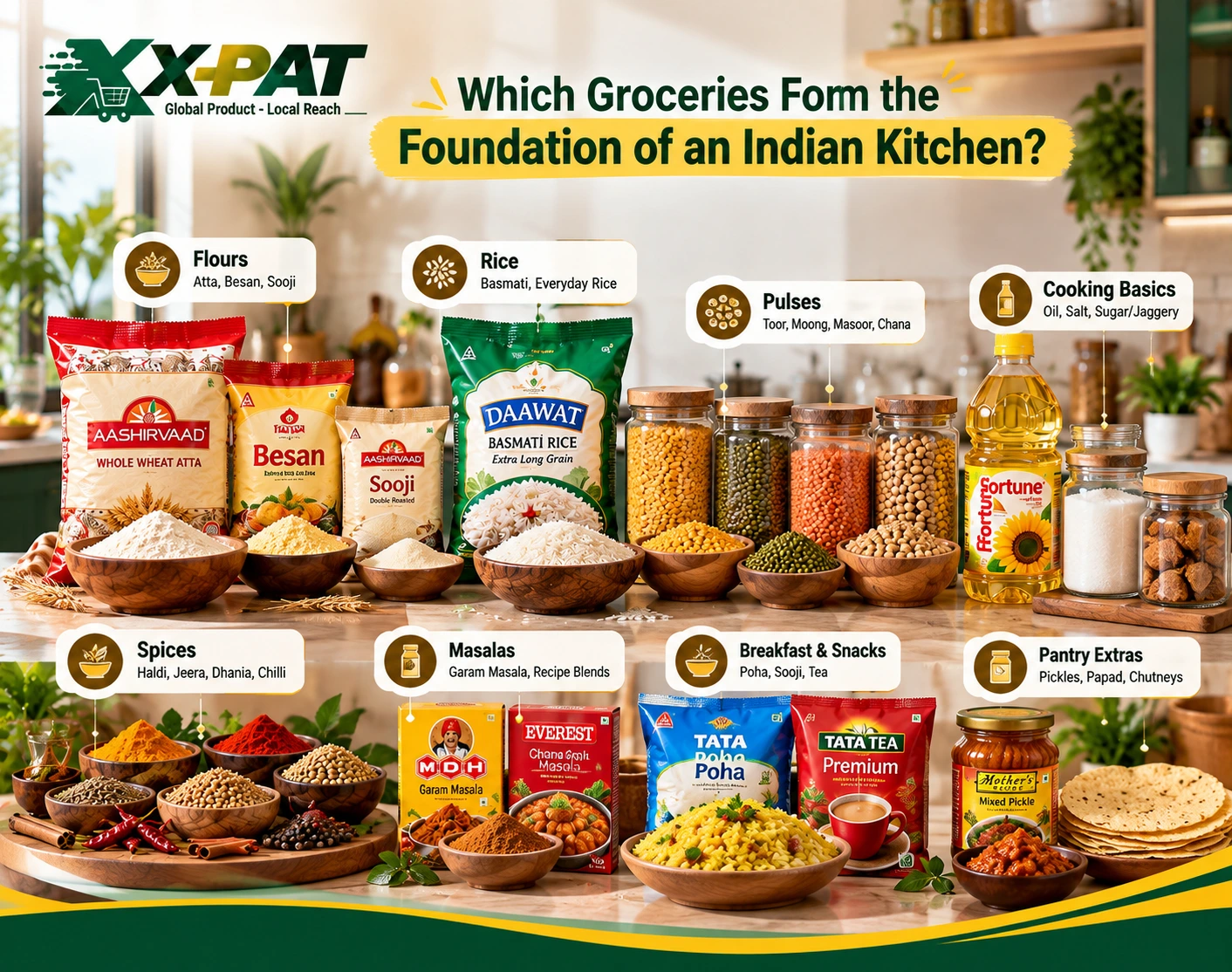
Which Groceries Form the Foundation of an Indian Kitchen?
A practical pantry can be divided into a few simple groups.
Pantry Group | Useful Groceries | Common Uses |
Flours | Atta, besan, sooji | Roti, paratha, chilla, snacks |
Rice | Basmati, everyday rice | Dal-rice, pulao, biryani |
Pulses | Toor, moong, masoor, chana | Dal, khichdi, curries |
Spices | Haldi, jeera, dhania, chilli | Everyday seasoning |
Cooking Basics | Oil, salt, sugar/jaggery | Daily preparation |
Masalas | Garam masala, recipe blends | Curries and selected dishes |
Breakfast & Snacks | Poha, sooji, tea | Quick meals and refreshments |
Pantry Extras | Pickles, papad, chutneys | Meal accompaniments |
Your exact list should depend on what your household actually cooks.
Why Should Atta Be One of Your First Pantry Staples?
For households that regularly eat roti, chapati or paratha, atta is one of the most useful products to keep available.
Indian-style atta is generally associated with wheat flour intended for preparing soft flatbreads. When buying Indian atta in Ghana, shoppers should check the exact flour type rather than assuming every packet labelled wheat flour will behave the same way when kneaded.
Pack size also matters.
A household making rotis every day may finish a larger bag comfortably. Someone cooking Indian flatbreads only occasionally may find a smaller pack more practical.
Atta can also support several meal ideas beyond plain roti, including paratha and other wheat-based preparations.
Which Rice Should You Keep for Everyday Indian Meals?
Rice is another foundation ingredient, but not every household needs the same variety.
Basmati rice is valued for its long grains and aroma and is commonly associated with dishes such as pulao and biryani. It can also be served with curries and dal.
Some households prefer another rice variety for simple everyday meals and reserve basmati for particular dishes.
Instead of automatically choosing the largest or most premium-looking pack, think about:
What will you cook? How frequently do you eat rice? What pack size can your household finish comfortably?
For shoppers buying basmati rice in Ghana, checking the rice variety, grain information, pack size and product description can make comparison easier.
Why Do Dals and Pulses Deserve Their Own Pantry Section?
If atta and rice provide the base of many meals, dals and pulses bring variety to the pantry.
Common choices include:
Toor dal – frequently used for dal preparations
Moong dal – useful for dal and khichdi
Masoor dal – convenient for everyday lentil dishes
Chana dal – used in several savoury preparations
Whole chickpeas – useful for chana-based meals
Rajma – commonly used for kidney bean curry
You do not need all of them on day one.
Start with two or three varieties your household already enjoys. Once those become part of your regular meal routine, add others.
This prevents the pantry from filling with pulses that looked useful at the time of purchase but rarely reach the cooking pot.
What Are the Basic Spices Every Indian Kitchen Needs?
Indian cooking can involve an enormous range of spices, but a functional starter pantry can remain surprisingly compact.
Consider beginning with:
Cumin (Jeera)
Useful for tadka, rice, vegetables and curries.
Turmeric (Haldi)
Commonly used in dals, vegetables and curry preparations.
Coriander Powder (Dhania)
A versatile ingredient for gravies and vegetable dishes.
Red Chilli Powder (Lal Mirch)
Used to control heat and, depending on the variety, colour.
Mustard Seeds (Rai/Sarson)
Useful for tempering and selected regional preparations.
Garam Masala
An aromatic blend that can be used in numerous curry-style dishes.
As your cooking expands, you can add ajwain, hing, fenugreek, black pepper and whole aromatic spices.
The important thing is to buy spices according to recipes—not simply because they belong on a list of “Indian essentials.”
Do You Need Ready-Made Masala Blends?
Not necessarily, but they can make particular recipes more convenient.
A household that frequently prepares chana might keep a suitable chana masala. Someone regularly cooking biryani may find a biryani masala useful.
However, these blends should not be confused with basic single spices.
Before buying a packaged masala, check its product name, ingredient list, intended use, pack size and storage instructions.
Buying five different specialised masalas when you rarely prepare those dishes can create unnecessary pantry clutter.
Start with your basic spices, then add recipe-specific blends based on your actual cooking.
Which Cooking Oil Should an Indian Pantry Have?
Cooking oil is an everyday necessity, but there is no single oil that every Indian kitchen must use.
Households choose oils according to cooking method, taste, recipe and personal preference.
The practical consideration is whether the oil works for the meals you commonly prepare.
If your household uses more than one type, avoid purchasing large quantities of each without considering consumption. Keeping manageable quantities makes pantry organisation easier.
Always follow the manufacturer’s storage and usage instructions for the product you purchase.
What Other Cooking Basics Are Easy to Forget?
Salt is obvious—until the packet is empty halfway through cooking.
A practical grocery checklist should therefore include frequently overlooked basics such as:
Salt, sugar or jaggery, cooking oil, tea, basic condiments and commonly used seasonings.
Some households may also regularly use ginger-garlic paste, pickles, papad or other accompaniments.
The definition of an “essential” grocery changes from family to family.
If your household drinks tea every morning, tea is clearly an essential. If nobody eats pickles, adding three pickle jars to an essential-grocery list makes little sense.
Your pantry should reflect your household, not a generic checklist.
What Should You Keep for Quick Indian Breakfasts?
A well-planned pantry should also help on mornings when there is little time to prepare an elaborate meal.
Depending on your food preferences, useful dry ingredients may include poha, sooji, besan or other breakfast staples.
For example, besan can be used for chilla and various savoury preparations. Sooji can support several breakfast or snack recipes. Poha provides another familiar meal option when the necessary accompanying ingredients are available.
Keeping two or three breakfast bases creates flexibility without requiring a cupboard full of specialised products.
How Can You Plan Groceries Around Complete Meals?
This is where pantry planning becomes much easier.
Instead of making isolated lists for rice, flour, pulses and spices, build combinations around meals.
For dal-rice, you might need rice + dal + cumin + turmeric + chilli + oil.
For roti-sabzi, think atta + vegetables + cumin + coriander + turmeric + chilli.
For chana-rice, consider chickpeas + rice + basic spices + suitable masala.
For paratha, atta + appropriate filling + seasonings may form the core list.
One grocery item can appear across several meals.
That overlap tells you which products deserve priority in your pantry.
How Much Grocery Stock Should You Keep at Home?
The answer depends more on consumption than household size alone.
A useful approach is to divide products into three groups:
High-use: atta, rice, frequently used dal, oil and everyday spices.
Medium-use: breakfast products, selected pulses and regularly used masala blends.
Occasional-use: speciality spices, recipe-specific products and accompaniments.
Purchase larger quantities only where your consumption supports them.
This is especially useful for Indian grocery shopping in Ghana, where you may be tempted to stock up whenever you find a familiar product. Buying extra can sometimes be practical, but only when you can store and consume it appropriately.
How Should You Store Indian Grocery Staples?
Good purchasing and good storage should work together.
Always follow the instructions on the package. In general, dry grocery products benefit from protection against moisture, excessive heat and contamination.
After opening products such as rice, atta, dal and spices, keep them appropriately sealed. Use clean, dry utensils when handling dry ingredients.
Also practise simple pantry rotation.
Put older products where they are easy to reach and use them before newly purchased packs, while always checking package dates and product condition.
A five-minute pantry check before shopping can prevent duplicate purchases.
How Can Shoppers in Ghana Build an Indian Pantry Gradually?
There is no need to buy everything at once.
Stage 1 – Build the meal base:
Start with atta, rice, one or two dals, cooking oil and salt.
Stage 2 – Build the flavour base:
Add cumin, turmeric, coriander powder, chilli powder and a versatile masala according to your recipes.
Stage 3 – Add convenience:
Choose breakfast staples, tea and products your household uses frequently.
Stage 4 – Personalise:
Add specialised pulses, whole spices, masala blends, pickles and other favourites.
This gradual approach can make shopping more purposeful and help you understand which ingredients genuinely deserve permanent space in your kitchen.

What Should You Check When Buying Indian Groceries Online in Ghana?
Online shopping is convenient, but product names alone should not determine your purchase.
Before adding an item to your basket, check the available product description, quantity or pack size, variant, ingredients where relevant, packaging information and current availability.
Pay particular attention to products that have similar names.
Atta and general wheat flour may not be identical for your intended recipe. Whole cumin and cumin powder are different formats. Garam masala and a recipe-specific masala blend are not automatically interchangeable.
Reading before ordering can prevent a lot of frustration when it is time to cook.
Where Can You Explore Indian Groceries in Ghana?
Shoppers looking for Indian groceries in Ghana can explore specialist grocery options, supermarkets carrying international foods and online grocery platforms.
For X-PAT shoppers, the useful approach is to check the current catalogue for available Indian grocery products, brands and pack sizes rather than relying on an older product list.
You can plan your basket around meals: atta with dal and spices, rice with pulses, or breakfast products with tea and other household essentials.
This turns online grocery shopping from random product browsing into practical pantry planning.
Build a Kitchen That Works for Your Everyday Meals
The best-stocked Indian kitchen is not necessarily the one with the most products.
It is the one where the ingredients you need most often are already within reach.
Start with atta, rice, dals, cooking oil and everyday spices. Add breakfast products, masala blends and accompaniments according to your household’s habits. Check your pantry before every grocery order and buy quantities that match your actual consumption.
For shoppers exploring Indian groceries in Ghana, X-PAT can be used to check the current selection of grocery essentials and plan purchases around the Indian meals you want to prepare.
A practical pantry is built one useful ingredient—and one meal—at a time.
Frequently Asked Questions
What are the most essential Indian groceries for a kitchen?
Atta, rice, dal, cooking oil, salt and commonly used spices such as cumin, turmeric, coriander and chilli provide a practical starting point.
What should I buy for my first Indian grocery pantry?
Begin with ingredients for meals you already cook. Atta, rice, one or two dals, oil and five or six everyday spices can form a useful starter pantry.
Which dals should I keep at home?
Toor, moong, masoor and chana dal are common options, but you do not need all of them. Choose the varieties used in your regular recipes.
Which spices are essential for everyday Indian cooking?
Cumin, turmeric, coriander and chilli are versatile choices. Garam masala and mustard seeds can also be useful depending on the dishes you prepare.
Do I need basmati rice for Indian cooking?
No. Indian cooking uses multiple rice varieties. Basmati is particularly useful when its long grain and aroma suit the dish, such as certain pulao and biryani preparations.