Atta or Regular Wheat Flour? The Difference You’ll Notice in Your Dough, Roti and Everyday Cooking
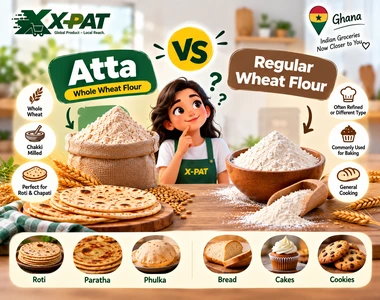
What is the difference between atta and regular wheat flour? Both are made from wheat, but they may differ in the wheat used, milling process, fineness, whole-grain content and intended use. Indian atta is commonly made for soft, flexible dough used in roti, chapati and paratha, while products labelled simply “wheat flour” can vary considerably depending on how and where they are produced.
If you are shopping for Indian groceries in Ghana, this difference becomes particularly important. You may find a packet labelled whole wheat flour and naturally assume it will behave exactly like the atta you used in India.
Then you make the dough.
It feels different. The roti rolls differently. And the final texture is not quite what you expected.
So, is the packet wrong? Not necessarily. The two products may simply have been milled and formulated for different cooking purposes.
Let’s understand what really matters.
What Exactly Is Atta?
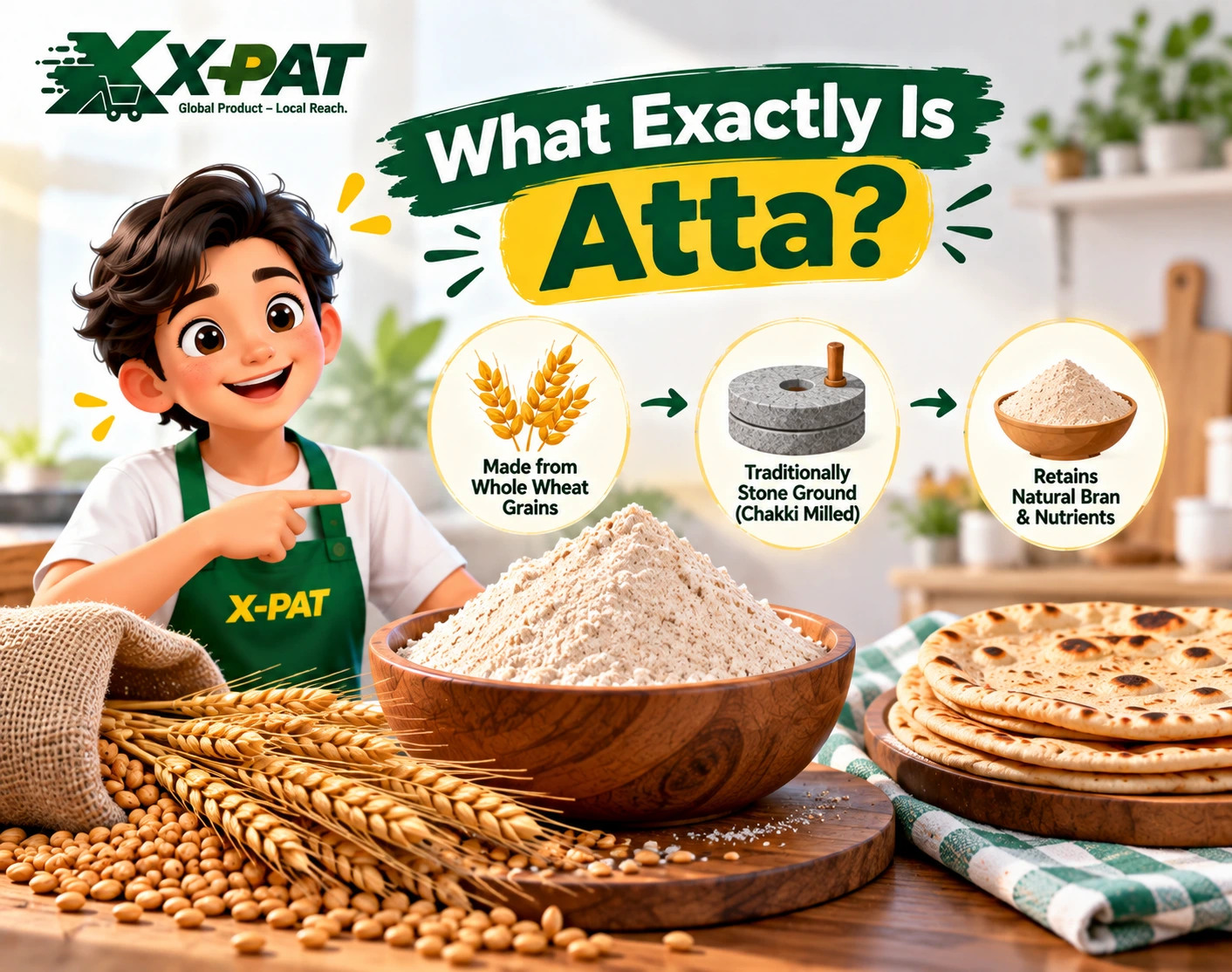
Atta is a wheat flour strongly associated with Indian and South Asian cooking. It is particularly important for everyday flatbreads such as roti, chapati, phulka and paratha.
Traditionally, atta is associated with chakki milling, although commercial manufacturing methods vary between brands.
What matters to the home cook is how the flour behaves.
Atta intended for Indian flatbreads should be capable of forming a workable dough that can be kneaded, rested, rolled and cooked into the desired roti or chapati.
This is why you’ll often see Indian atta packages specifically mentioning roti or chapati rather than simply describing themselves as wheat flour.
Then What Is “Regular Wheat Flour”?
This is where the confusion begins.
Wheat flour is a broad description, not one single standardized cooking experience.
Different wheat flours can be produced using different parts of the grain, different wheat varieties and different milling processes. They can also be made for completely different foods.
A wheat flour available in Ghana could be intended primarily for bread, baking or general cooking rather than Indian flatbreads.
So:
All atta is wheat flour, but not every wheat flour will necessarily behave like the atta you expect for roti.
That is the key distinction shoppers should remember.
Atta vs Regular Wheat Flour: What Are the Main Differences?
Here’s a simple way to understand them.
Feature | Indian Atta | Regular Wheat Flour |
Base ingredient | Wheat | Wheat |
Typical purpose | Roti, chapati, paratha, phulka | Depends on the flour |
Milling | Often associated with fine/chakki-style milling | Varies widely |
Whole grain | Commonly sold as whole-wheat atta | May be whole, refined or differently processed |
Dough behaviour | Designed with Indian flatbread preparation in mind | Depends on product |
Texture | Usually suitable for rolling flatbreads | Can vary significantly |
Best way to choose | Check ingredients + intended use | Check exact flour type + intended use |
The biggest mistake is therefore comparing only the words printed in large letters on the front of the packet.
You need to know what the flour was made for.
Why Can Two Wheat Flours Feel Completely Different?
Imagine buying two bags of rice.
Both say “rice,” but one could be long-grain basmati while another is a shorter, stickier variety.
They belong to the same broad food category, but you wouldn’t expect them to produce identical results.
Wheat flour works similarly.
Differences in the wheat, milling process, particle size, bran content and other product characteristics can influence how flour absorbs water and how the dough handles.
This is why one flour might produce dough that feels comfortable for rolling, while another may require adjustments to water, resting or kneading.
The label “wheat flour” alone doesn’t tell the complete story.
Does the Milling Process Matter?
Yes, milling is one factor that can affect flour characteristics.
You’ll frequently encounter the term “chakki atta” when shopping for Indian flour.
Traditionally, a chakki refers to a stone-grinding system. Today, large commercial atta brands use modern manufacturing processes, so the exact method can differ considerably between products.
Rather than assuming anything labelled “chakki” must automatically be superior, use it as one piece of information.
Check:
What grain is used?
Is it whole wheat?
What does the manufacturer recommend it for?
Is roti or chapati mentioned?
Those details are more useful than relying on a single marketing term.
Is Atta the Same as Whole-Wheat Flour?
They overlap, but treating the terms as completely interchangeable can create confusion.
Many Indian atta products are whole-wheat flours.
However, whole-wheat flour sold in another country may be produced from different wheat or milled differently and may have been designed primarily for bread or baking.
That doesn’t make one “good” and the other “bad.”
It means their intended cooking applications can differ.
If your goal is Indian roti, look beyond “whole wheat” and see whether the manufacturer describes the flour as appropriate for chapati, roti or Indian flatbreads.
Atta vs Maida: Don’t Confuse These Either
This distinction is easier.
Atta is generally associated with whole-wheat flour, while maida is refined wheat flour.
Removing more of the bran and germ produces a lighter, more refined flour with different cooking characteristics.
In Indian kitchens, maida is commonly associated with foods such as certain types of naan, bhatura, bakery items and snacks, depending on the recipe.
So if you’re shopping online and see:
Atta → Whole-wheat Indian flatbreads
Maida → Refined wheat flour
don’t substitute one for the other without considering the recipe.
Which One Is Better for Roti: Atta or Regular Wheat Flour?
For a traditional Indian-style roti or chapati, atta specifically intended for flatbread preparation is generally the more straightforward choice.
But that doesn’t mean a product called “regular wheat flour” can never make roti.
The question is what that particular flour contains and how it is milled.
Instead of asking:
“Is wheat flour good for roti?”
A better shopping question is:
“Is this particular wheat flour suitable for roti?”
Check the package or online product description.
If it clearly mentions roti, chapati or flatbread, you have much more useful information than the generic product category alone provides.
Why Does Your Roti Sometimes Become Hard?
People often blame the flour immediately when a roti doesn’t turn out as expected.
The flour can matter—but it isn’t the only variable.
Roti texture can also be influenced by:
Water quantity: Too little or too much changes dough consistency.
Kneading: Dough development affects handling.
Resting: Many roti dough preparations benefit from an appropriate resting period.
Rolling: Uneven thickness can affect cooking.
Cooking temperature and time: Overcooking can dry a roti.
Storage after cooking: Leaving cooked rotis uncovered can affect moisture and texture.
So if you’re trying a new atta brand in Ghana, don’t judge the entire packet based on one unsuccessful batch.
You may need to slightly adjust your normal water or preparation method.
How Can You Compare Atta and Wheat Flour While Shopping Online?
When buying atta online in Ghana, don’t let the package design make the decision for you.
Open the product details.
Then perform this quick check:
1. Read the Product Name
Does it say:
Whole Wheat Atta?
Chakki Atta?
Whole Wheat Flour?
Bread Flour?
All-Purpose Flour?
These aren’t automatically equivalent products.
2. Read the Ingredients
Understand what you’re actually buying.
If you’re looking for traditional whole-wheat atta, check whether whole wheat is the primary ingredient and whether anything else has been added.
3. Check the Intended Use
Look for references to:
Roti • Chapati • Paratha • Indian Flatbread
This is one of the easiest clues for shoppers unfamiliar with the brand.
4. Compare Pack Size
Don’t compare a 1 kg bag with a 5 kg bag using only the displayed total price.
Compare the quantity you receive and, when useful, calculate the price per kilogram.
5. Check Current Availability
For imported Indian groceries, brands and pack sizes may change.
Always check current stock, price and delivery information before placing an order.
Does the Brand of Atta Really Matter?
Brand can help you identify a product you’ve used before, but it shouldn’t be your only quality check.
Suppose your usual Indian atta isn’t currently available in Ghana.
Would that mean you can’t make roti?
Not necessarily.
Compare another product based on:
Ingredients → flour type → intended use → pack size → product information → value
This gives you a practical way to evaluate unfamiliar options.
It is particularly useful for people living outside India, where the exact brand they grew up using may not always be available.
How Do You Know Whether a New Atta Works for Your Kitchen?
Your first packet should be treated almost like a kitchen test.
Prepare your normal dough and observe it at four stages.
While adding water: How easily does the flour form dough?
After kneading: Does the dough become workable?
While rolling: Can you roll the roti comfortably without excessive cracking or sticking?
After cooking: Do you like the texture, flavour and overall result?
This tells you much more than a claim on the front of a packet.
If you like the result, you can confidently consider a larger pack next time.
Should You Buy a Small or Large Atta Pack?
Buying the biggest bag is tempting, especially if the price per kilogram looks attractive.
But consumption matters.
A person who prepares roti twice a month has very different requirements from a household making it every day.
A simple approach is:
Household Use | Practical Approach |
Trying a new brand | Start smaller if available |
Occasional roti | Smaller pack may be practical |
Regular family cooking | Medium pack may make sense |
High atta consumption | Larger pack may offer convenience |
Whatever size you choose, follow the product’s storage instructions and protect opened flour appropriately from moisture and contamination.

What Should Shoppers in Ghana Check Before Buying Atta?
If you’re searching for Indian atta in Ghana, there is an additional challenge: availability.
Imported grocery selections can change, so an article written today shouldn’t promise that a particular brand or pack will always be available tomorrow.
Instead, use this simple ATTA check:
A — Actual ingredients
Read what’s inside.
T — Type of flour
Whole wheat, chakki atta, refined flour or another type?
T — Target cooking use
Roti, chapati, baking, bread or general cooking?
A — Amount and availability
Check pack size, current price, stock and delivery information.
Four letters. Four checks. Much less confusion.
Where Can You Explore Indian Atta Online in Ghana?
Indian atta may be available through specialist Indian grocery shops, supermarkets and online grocery platforms serving Ghana.
Online shopping is particularly useful when you want to compare multiple pantry products at once.
Instead of making a separate trip for atta, another for rice and another for spices, you can search for several Indian grocery categories together.
For shoppers using X-PAT, check the current catalogue for available atta, rice, pulses, spices, cooking essentials and other Indian grocery products.
Because stock can change, the live X-PAT catalogue—not an old blog post—should be your reference for current brands, pack sizes, prices and availability.
X-PAT — Global Product, Local Reach.
Atta or Wheat Flour? Let Your Recipe Decide
The most useful difference between atta and regular wheat flour isn’t simply what they’re called.
It’s how they’re made and what they’re intended to do in your kitchen.
If you’re preparing roti, chapati or paratha, look for flour intended for Indian flatbreads. If you’re baking bread or following another recipe, a different wheat flour may be appropriate.
So the next time you’re standing in front of six flour packets—or scrolling through them online—don’t ask:
“Which packet says wheat?”
Ask:
“Which flour fits what I’m cooking?”
That one question can make your choice much easier.
FAQs: Atta vs Regular Wheat Flour
What is the main difference between atta and regular wheat flour?
Atta is a wheat flour commonly produced and marketed for Indian flatbreads such as roti and chapati. Regular wheat flour is a broader term, and its milling, composition and intended use can vary by product.
Is atta the same as whole-wheat flour?
Many atta products are whole-wheat flour, but not every whole-wheat flour is milled or designed in the same way. A whole-wheat flour made primarily for bread may behave differently from atta intended for roti.
Can I make roti with regular wheat flour?
Possibly, depending on the specific flour. Check its ingredients, texture and intended use. Flour specifically intended for roti or chapati is generally the more predictable option.
Is atta healthier than regular wheat flour?
You can’t determine that from the word “atta” alone. Compare the actual ingredients, whole-grain content, nutrition label and serving size of the specific products.
Is atta the same as maida?
No. Atta is generally associated with whole-wheat flour, while maida is refined wheat flour. They behave differently and are used for different recipes.