Looking for Indian Atta in Ghana? Here’s How to Find the Right Flour for Your Rotis
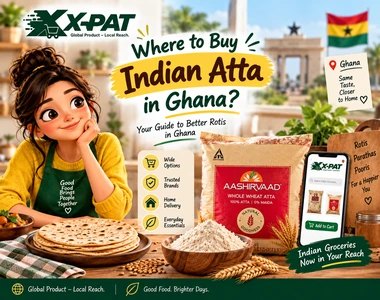
Where can you buy Indian atta in Ghana? Indian-style whole-wheat atta can be found through selected supermarkets, specialist grocery stores and online retailers serving Ghana. For example, a current Ghana retailer listing shows chakki-fresh atta in a 5 kg pack. X-PAT shoppers should check the live catalogue for current atta options, pack sizes, prices and delivery availability before ordering.
For many Indian kitchens, running out of atta is not a small problem.
Rice can wait. Snacks can wait. But when the family expects fresh roti, chapati or paratha, ordinary flour may not give you the texture you are used to.
And when you are shopping in Ghana, the flour aisle can become confusing. You may see wheat flour, whole-wheat flour, bread flour, all-purpose flour and atta—but are they all suitable for Indian rotis?
Not exactly.
Here is a practical guide to finding and choosing Indian atta in Ghana, without buying the wrong flour just because the packet says “wheat.”
First, What Exactly Is Indian Atta?
Atta is wheat flour widely used in Indian and South Asian cooking, especially for everyday flatbreads such as:
- Roti and chapati
- Phulka
- Paratha
- Poori
- Thepla and other wheat-based breads
Whole-wheat atta generally uses the whole wheat grain, including the bran, germ and endosperm. The milling and fineness of the flour also affect how the dough handles and how the finished roti turns out.
That is why buying flour only by looking at the words “whole wheat” may not always reproduce the same cooking experience as the atta you normally use.
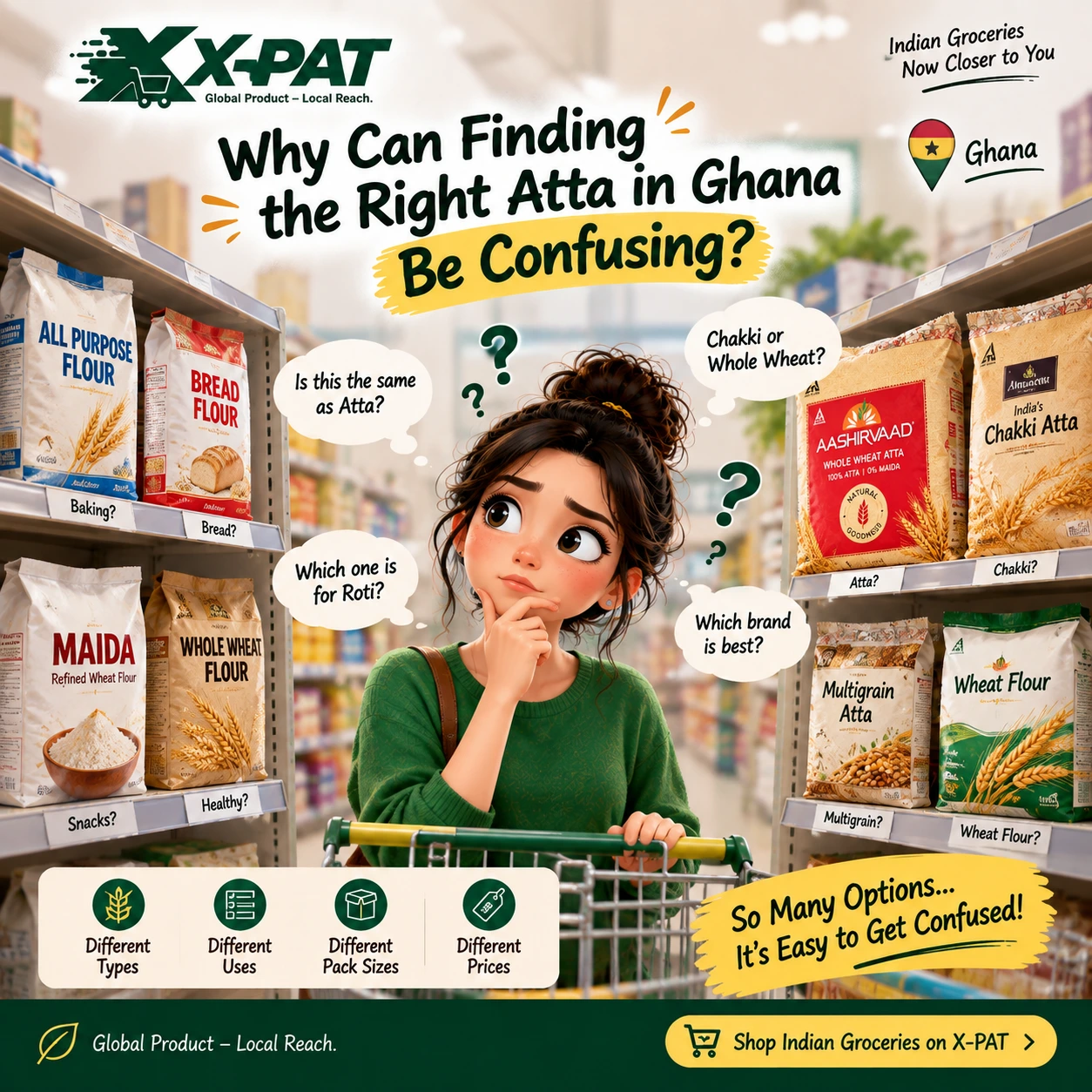
Why Can Finding the Right Atta in Ghana Be Confusing?
The challenge is often not finding flour. It is finding flour suited to Indian cooking.
A supermarket may carry several wheat-based products, but each can be milled or processed for a different purpose.
Consider this quick comparison:
Flour Type | Common Use | For Indian Roti? |
Whole-Wheat Atta | Roti, chapati, paratha | Common choice |
Chakki Atta | Roti, phulka, paratha | Common choice |
Maida / Refined Flour | Naan, bhatura, baking, snacks | Different from whole-wheat atta |
All-Purpose Flour | General baking/cooking | Not the same as atta |
Bread Flour | Yeast breads | Usually not the first choice for roti |
Multigrain Atta | Flatbreads, depending on blend | Depends on ingredients |
So when you search for Indian flour in Ghana, be specific.
Instead of simply searching “flour Ghana,” try terms such as whole wheat atta Ghana, Indian atta Ghana, chakki atta Ghana, or atta online Ghana.
Where Can You Buy Indian Atta in Ghana?
There are three practical routes worth checking.
1. Indian and Specialist Grocery Stores
Specialist grocery shops are a natural place to look because they are more likely to understand products used in Indian cooking.
Availability can change, however.
A shop carrying your preferred atta today may have a different brand or pack size next month, particularly with imported groceries.
For that reason, check current stock rather than travelling based on an old online post.
2. Supermarkets and Grocery Retailers
Some Ghana grocery retailers also list Indian-style atta.
For example, at the time checked, Ghana-based Neha Supermarket had an online listing for Al Baker Chakki Fresh Atta 5 kg. The retailer describes it as flour made from whole wheat.
That demonstrates an important point: Indian-style atta is available through some Ghana retail channels, but the exact brand, pack size, price and stock can change.
3. Online Grocery Shopping
Online grocery shopping can make atta hunting easier because you can inspect the product information before leaving home.
For X-PAT customers, the better approach is to search the current X-PAT catalogue for atta and flour rather than relying on an old blog to tell you what is in stock.
That keeps this guide useful even when the available brands change.
Atta, Whole-Wheat Flour and Maida: Are They the Same?
No—and this is one of the most important things to understand before ordering.
Atta is associated with Indian flatbread preparation.
Whole-wheat flour is a broader category. Its grind and wheat characteristics can vary depending on the market and intended use.
Maida is refined wheat flour and behaves differently from whole-wheat atta.
This distinction matters because changing the flour changes the dough.
If your goal is a familiar everyday chapati or roti, check that the product is actually intended for that style of cooking rather than assuming every wheat flour will behave identically.
What Should You Check Before Buying Atta Online in Ghana?
Don’t judge an atta packet by the front design alone.
Turn the virtual packet around.
Start with the ingredients. If you want traditional whole-wheat atta, check whether whole wheat is the main ingredient and whether anything else has been added.
Then inspect the product description. Does it mention chapati, roti or other Indian flatbreads?
Check the net weight, because comparing a 1 kg pack with a 5 kg pack based only on total price makes little sense.
Also review the packaging images, manufacturer information, storage instructions and current delivery information.
A useful five-second test is:
What is it made from → what is it meant for → how much am I getting → what does it cost → can it currently be delivered to me?
If the product page answers those questions clearly, comparing options becomes much easier.
1 kg, 5 kg or 10 kg Atta: Which Pack Should You Buy?
The largest packet isn’t automatically the smartest purchase.
If you’re trying an unfamiliar atta brand in Ghana, a smaller pack reduces the risk of being stuck with flour that doesn’t produce the rotis you like.
A 5 kg or larger pack can make more sense for a household that prepares rotis regularly—but only if you can store it properly.
Think in terms of household usage:
Occasional cooking: smaller pack.
Regular roti household: medium pack.
Large family/high consumption: larger pack may be practical after checking value and storage.
When comparing pack sizes, calculate the price per kilogram, not only the packet price.
How Can You Tell Whether Atta Is Good for Roti?
The packet tells you part of the story.
Your first dough tells you the rest.
When you try a new atta, notice how easily the flour absorbs water and forms dough. After resting and rolling, see whether the dough is manageable rather than constantly cracking or becoming difficult to handle.
Then check the cooked result.
Does the roti remain pleasant to eat? Does the flour produce the texture your household prefers? Is the wheat flavour appropriate?
These practical cooking results can be more meaningful than attractive packaging.
A brand that works beautifully in one household may not necessarily be everyone’s preferred option because water quantity, kneading, cooking method and personal texture preferences also matter.
What If You Cannot Find Your Usual Indian Atta Brand?
This happens frequently when shopping outside India.
Instead of immediately rejecting every unfamiliar brand, compare the product characteristics.
Suppose you normally purchase Brand A, but only Brand B is currently available in Ghana.
Ask:
Is it whole wheat?
Is it designed for chapati or roti?
What ingredients does it contain?
What is the pack size?
How is it described?
Does the packaging provide adequate product information?
You may discover that another atta fits your cooking needs even though the logo on the packet is unfamiliar.
This is more useful than restricting yourself to one brand indefinitely.
Should You Choose Chakki Atta?
You will often encounter the word “chakki” when shopping for Indian atta.
Traditionally, chakki refers to stone-style milling. Modern commercial products using the term can vary in how they are processed, so check the manufacturer’s actual product information rather than treating the word alone as a guarantee of quality.
Stone-ground whole-wheat atta products are commonly marketed for rotis and chapatis. For example, current product descriptions from atta manufacturers specifically position such flour for Indian flatbreads.
If you like the texture of chakki atta, it can therefore be a useful search term when shopping in Ghana.
Can You Use Atta Beyond Roti?
Absolutely.
A packet of atta doesn’t have to wait for dinner.
Depending on the recipe, whole-wheat atta can be used for foods such as chapati, paratha, poori and other wheat-based preparations. Indian grocery retailers similarly describe whole-wheat atta as a staple used across multiple Indian breads.
That versatility matters when choosing pack size.
If your household uses atta for breakfast, lunch and dinner recipes—not only rotis—you may go through a larger pack much faster.
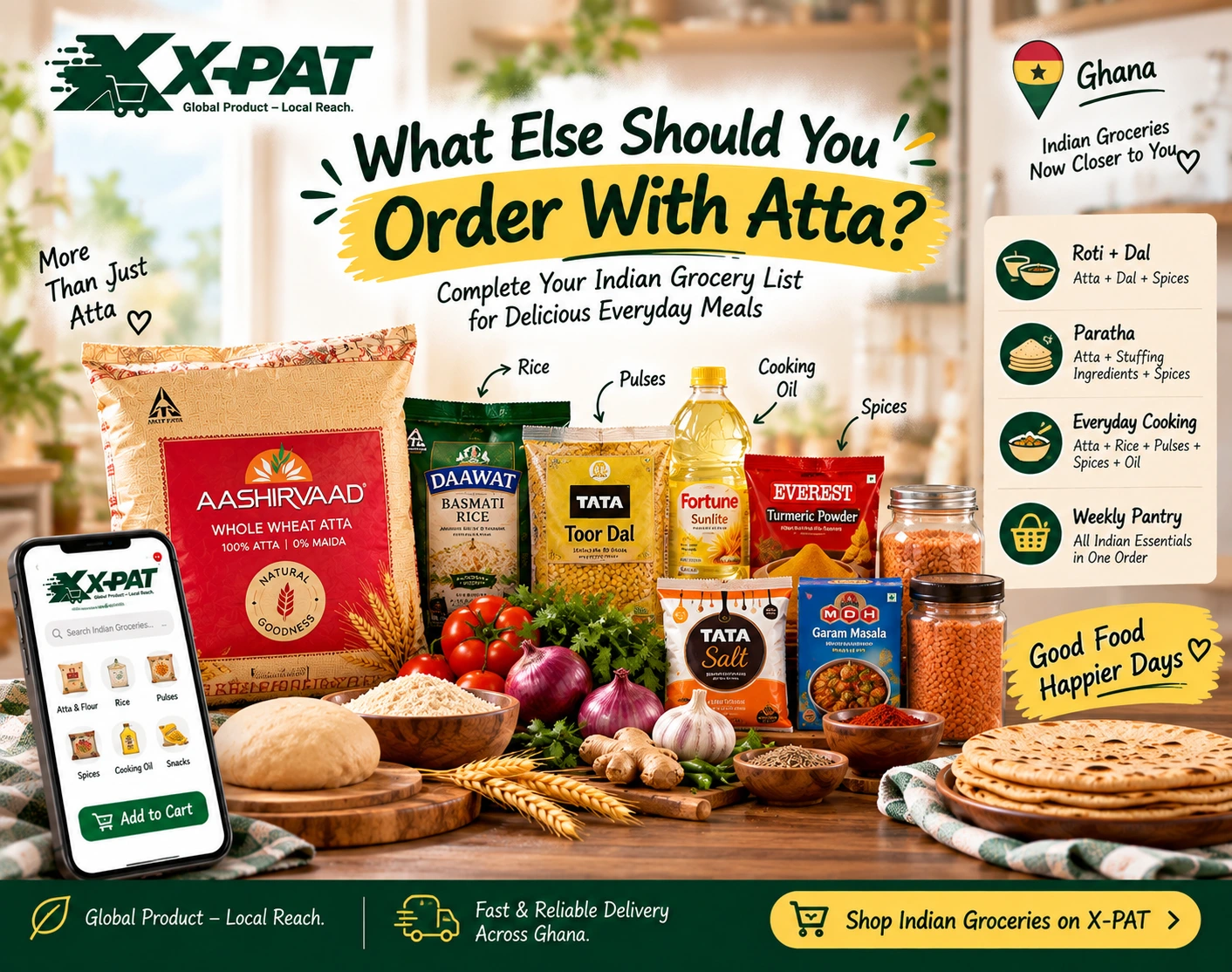
What Else Should You Order With Atta?
This is where online Indian grocery shopping becomes more convenient.
Don’t think about atta as an isolated purchase. Think about the meals you plan to prepare.
For roti + dal, your basket may need atta, dal, spices and cooking oil.
For paratha, you may need atta plus spices and suitable ingredients for the filling.
For a broader weekly Indian pantry restock, you might combine atta with rice, pulses, spices, cooking essentials, snacks and household products.
This meal-based shopping approach can be much easier than remembering individual grocery items one at a time.
How Should You Store Atta in Ghana?
Ghana’s warm conditions make sensible pantry storage particularly important.
Follow the storage instructions printed on the product packaging. In general, flour should be kept properly sealed and protected from moisture, direct sunlight and pantry pests.
After opening, an appropriate clean, dry, airtight food-storage container can make everyday handling easier when consistent with the manufacturer’s instructions.
Avoid mixing the remains of an old packet with a newly opened packet without checking both first.
And don’t throw away the original packaging immediately—you may need its best-before date, batch details or preparation information.
Is Buying Atta Online Better Than Searching Store to Store?
It depends on what matters to you.
A physical store lets you see the packet before purchasing and take it home immediately when available.
Online grocery shopping gives you another advantage: comparison.
You can compare product names, pack sizes, prices and descriptions without physically travelling between multiple shops.
For someone searching for Indian groceries in Ghana, that can be particularly useful when several pantry items need restocking together.
The best channel isn’t necessarily online or offline.
It is whichever currently has the product that suits your kitchen, at terms you’re comfortable with.
How Can X-PAT Fit Into Your Indian Grocery Shopping in Ghana?
X-PAT is designed around a simple problem: Indian grocery shopping becomes inconvenient when the products you need are scattered across different places.
Instead of treating atta as a one-product search, shoppers can use X-PAT to explore the current catalogue of Indian groceries and everyday essentials available for ordering in Ghana.
When shopping for atta, check the live product listing for the current brand, ingredients, pack size, price and delivery information before checkout.
That distinction matters.
This article can teach you what to buy.
The current X-PAT catalogue should tell you what you can buy right now.
X-PAT — Global Product, Local Reach.
Your 30-Second Atta Buying Checklist
Before adding atta to your cart, check five things:
Whole wheat or refined? Know what you’re actually purchasing.
Suitable for roti? Look at the intended uses.
Ingredients clear? Read the label rather than relying on the packet name.
Right pack size? Match quantity with household consumption.
Current availability? Confirm price, stock and delivery details on the retailer’s live product page.
Five quick checks can save you from bringing home a large bag of flour that doesn’t suit your cooking.
Your Roti Doesn’t Start on the Tawa—It Starts With the Right Atta
Finding Indian atta in Ghana isn’t simply about locating a packet labelled “flour.”
The better approach is to understand what kind of flour you’re buying, how it will be used, what the packet contains and whether the pack size makes sense for your household.
Once you know those things, unfamiliar shelves become much easier to navigate.
And the next time someone asks, “Ghana mein roti wala atta kahan milega?”, you’ll know exactly what to check before adding that packet to your basket.
For your next Indian grocery restock, check X-PAT’s current catalogue for available atta, rice, pulses, spices and other everyday grocery essentials.
Bilkul. “Where to Buy Indian Atta in Ghana” blog ke liye ye complete SEO details use karo. Isko X-PAT ke Indian Groceries Ghana topical cluster me rakhenge.
Where can I buy Indian atta in Ghana?
Indian-style atta can be found through selected specialist grocery stores, supermarkets and online retailers in Ghana. A Ghana retailer currently lists chakki-fresh atta online, showing that such products are available locally, although brands and stock can change.
Can I buy atta online in Ghana?
Yes, some online retailers serving Ghana list atta or whole-wheat flour. Always verify current product availability, pack size, price and delivery information before ordering.
Is atta the same as maida?
No. Atta is generally associated with whole-wheat flour used for Indian flatbreads, whereas maida is refined wheat flour. They have different characteristics and aren’t interchangeable in every recipe.
Which flour should I buy for chapati in Ghana?
Look for whole-wheat atta or a flour specifically described as suitable for chapati or roti. Check the ingredients and product description rather than relying only on the word “wheat.”
What does chakki atta mean?
Chakki traditionally refers to stone-style milling. Products labelled chakki atta are commonly positioned for Indian flatbreads, but processing methods can vary by manufacturer, so read the specific product information.