
How to Cook Perfect Basmati Rice at Home: Easy Steps for Long, Fluffy and Separate Grains
Cooking perfect basmati rice at home is simple when you follow the right method. Rinse the rice to remove excess surface starch, soak it for 20–30 minutes, use the correct water ratio, and cook it on low heat without stirring. Allowing the rice to rest after cooking helps produce long, fluffy, separate grains that are ideal for everyday Indian meals.
Whether you are preparing dal rice, jeera rice, vegetable pulao, or a special family dinner in Ghana, learning how to cook basmati rice properly can make a noticeable difference to your meals.
What Makes Basmati Rice Different From Regular Rice?
Basmati rice is a long-grain aromatic rice commonly used in Indian and South Asian cooking. It is appreciated for its distinctive fragrance, delicate texture, and grains that elongate during cooking.
Unlike many short-grain rice varieties, properly cooked basmati rice tends to remain separate rather than becoming sticky.
Some characteristics of basmati rice include:
- Long, slender grains that become longer when cooked.
- A naturally pleasant aroma.
- A light, fluffy texture when prepared correctly.
- Versatility for everyday meals and special recipes.
- Good pairing with Indian curries, dals, and vegetable dishes.
The quality and age of the rice, along with the cooking method, can affect the final texture.
What Ingredients Do You Need to Cook Perfect Basmati Rice?
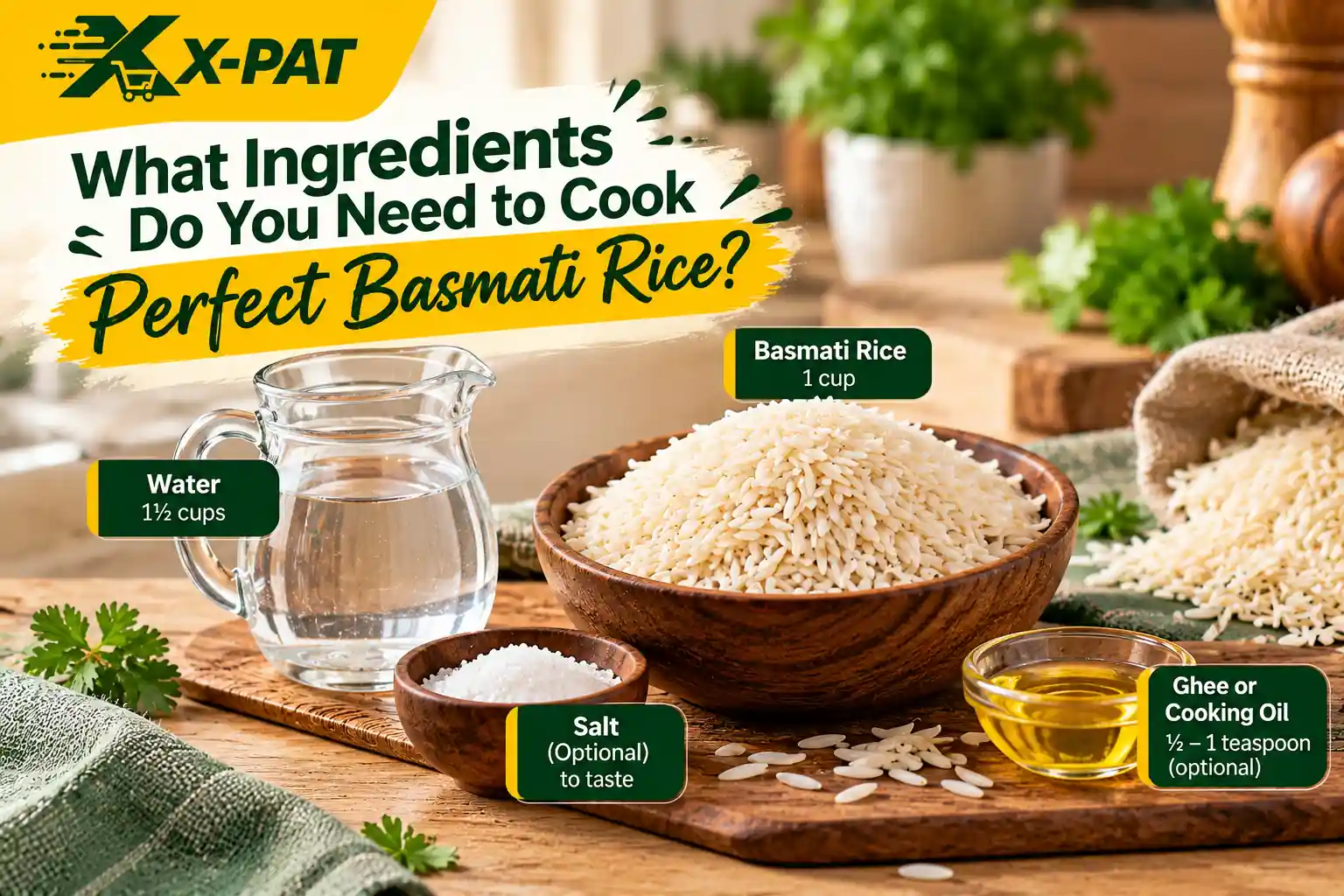
You do not need complicated ingredients or special equipment to prepare fluffy basmati rice.
Ingredient | Quantity |
Basmati rice | 1 cup |
Water | 1½ cups for the absorption method |
Salt | Optional, to taste |
Ghee or cooking oil | ½–1 teaspoon, optional |
You will also need a saucepan with a tight-fitting lid, a measuring cup, and a fork.
The suggested water quantity is a starting point for soaked white basmati rice. Some brands and varieties require slightly more or less water, so check the package instructions when available.
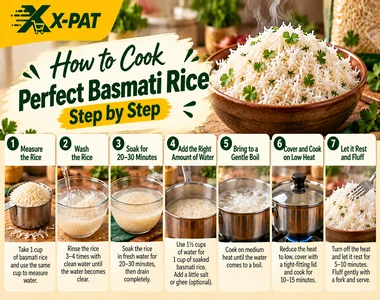
How to Cook Perfect Basmati Rice Step by Step
Cooking method: Covered saucepan · Servings: Approximately 2–3 · Total time: Around 40–50 minutes, including soaking and resting
Step 1: Measure the Rice Correctly
Start with one cup of uncooked basmati rice.
Use the same measuring cup for both rice and water. Consistent measurements help prevent the rice from becoming too soft or undercooked.
One cup of uncooked rice generally produces enough cooked rice for two to three servings, depending on portion size.
Step 2: Wash the Rice Thoroughly
Place the rice in a bowl and add clean water.
Gently move the grains with your fingers, then drain the cloudy water. Repeat this process three or four times, or until the water becomes noticeably clearer.
Washing helps remove excess surface starch, which can otherwise make the grains stick together.
Handle the rice gently to avoid breaking the long grains.
Step 3: Soak the Basmati Rice for 20–30 Minutes
After washing, cover the rice with fresh water and leave it to soak for approximately 20–30 minutes.
Soaking allows the grains to absorb moisture before cooking and can help them cook more evenly.
Once soaking is complete, drain the water thoroughly.
Do not use the soaking water as part of the measured cooking water unless the specific recipe requires it.
Step 4: Add the Correct Amount of Water
For one cup of soaked and drained white basmati rice, begin with approximately 1½ cups of fresh water.
Add the rice and water to a saucepan. You may also add a little salt or ghee for flavour.
The ideal water ratio depends on the rice variety, soaking time, pot, and cooking conditions. Adjust it slightly after your first attempt if necessary.
Step 5: Bring the Water to a Gentle Boil
Place the saucepan over medium heat and bring the water to a boil.
Once boiling, give the rice one gentle stir if needed to prevent grains from sticking to the bottom.
Avoid repeated stirring because basmati grains can break during cooking.
Step 6: Cover and Cook on Low Heat
Reduce the heat to its lowest setting and cover the saucepan with a tight-fitting lid.
Allow the rice to cook gently for approximately 10–15 minutes, or until the water has been absorbed and the rice is tender.
Avoid lifting the lid repeatedly because escaping steam can interfere with even cooking.
Step 7: Let the Rice Rest Before Serving
Turn off the heat and leave the saucepan covered for another 5–10 minutes.
This resting period allows moisture to distribute more evenly throughout the rice.
Finally, gently fluff the rice with a fork and serve.
The result should be tender, aromatic basmati rice with individual grains that separate easily.
What Is the Best Water Ratio for Basmati Rice?
The amount of water you use is one of the most important factors in cooking basmati rice.
Different methods require different quantities.
Cooking method | Suggested water ratio | Important note |
Stovetop absorption, soaked rice | 1 cup rice : 1½ cups water | Good starting point |
Stovetop absorption, unsoaked rice | 1 cup rice : 1¾–2 cups water | May need more cooking time |
Rice cooker | Follow appliance and rice instructions | Ratios vary by model |
Boiling and draining | Plenty of water | Drain when rice is tender |
These are general guidelines rather than universal measurements. Aged basmati rice, new-crop rice, and different brands can behave differently.
For reliable results, follow the packaging instructions and make small adjustments based on your preferred texture.
Should You Soak Basmati Rice Before Cooking?
Soaking basmati rice is recommended when you want longer-looking, evenly cooked grains.
It offers several practical benefits:
- Helps the grains hydrate before cooking.
- Encourages more even cooking.
- Can reduce the time needed on the stove.
- Helps achieve a softer texture without excessive stirring.
However, soaking is not mandatory.
If you are short on time, you can cook basmati rice without soaking, but you may need additional water and a longer cooking period.
How Do You Stop Basmati Rice From Becoming Sticky?
Sticky rice is a common problem, especially when cooking basmati for the first time.
To keep the grains separate, rinse the rice properly, avoid excess water, use gentle heat, and allow it to rest after cooking.
Common Basmati Rice Cooking Mistakes
Problem | Possible reason | What to do next time |
Rice becomes sticky | Excess starch or water | Rinse thoroughly and reduce water slightly |
Rice becomes mushy | Too much water or overcooking | Measure carefully and shorten cooking |
Rice remains hard | Insufficient water or cooking time | Add a little hot water and cook briefly |
Rice sticks to the bottom | Heat is too high | Use a heavy-bottomed pot and low heat |
Grains break | Excessive stirring | Handle and fluff gently |
Rice cooks unevenly | Poor heat distribution | Use a suitable pot with a tight lid |
Making small adjustments is usually more effective than changing the entire cooking method.
Can You Cook Basmati Rice Without a Rice Cooker?
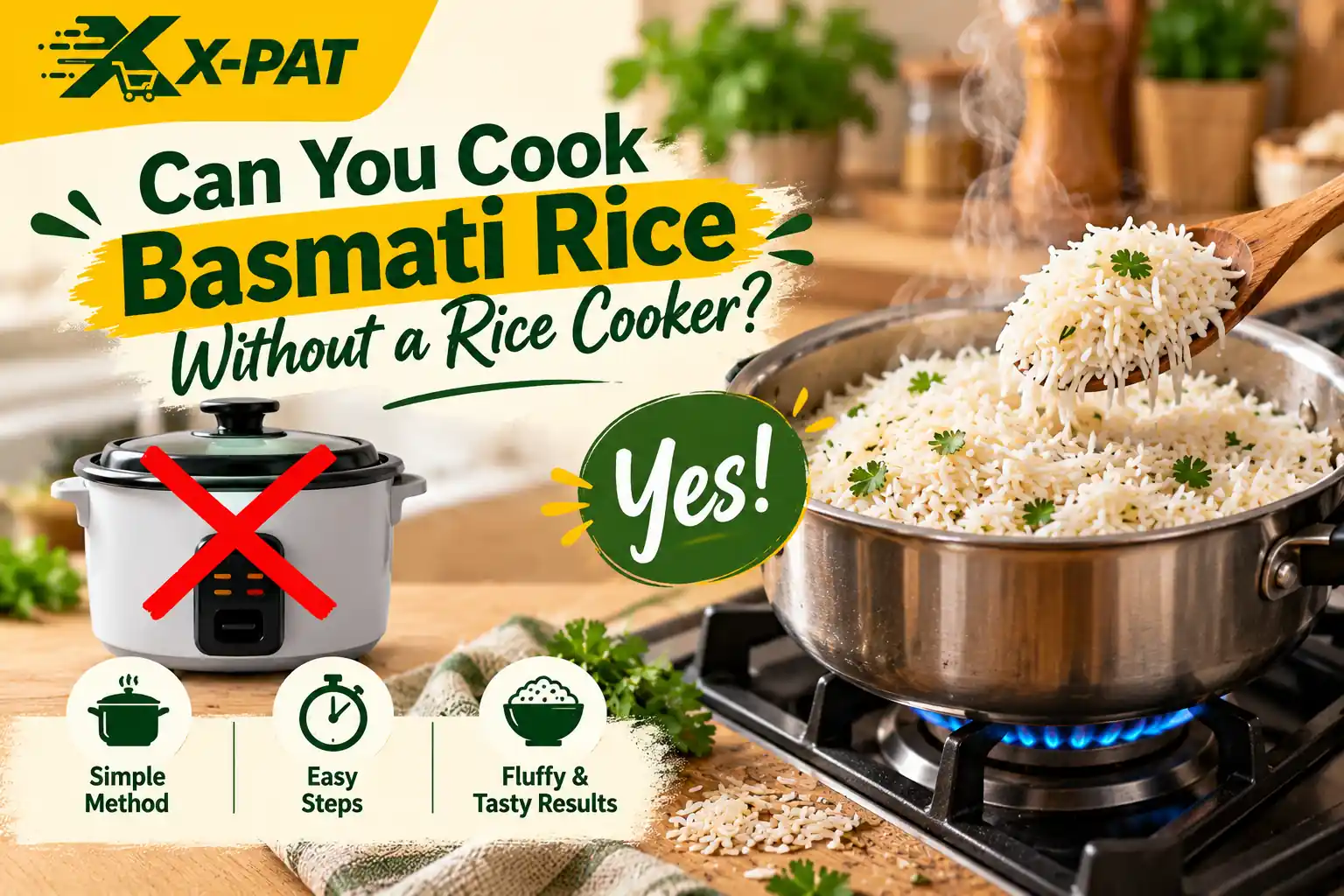
Yes. A regular saucepan is enough to cook excellent basmati rice at home.
A heavy-bottomed pot is especially useful because it distributes heat more evenly and reduces the chance of scorching.
The most important requirements are measured water, low heat, a properly fitted lid, and enough resting time.
A rice cooker offers convenience, but it is not essential for fluffy rice.
How to Cook Basmati Rice for Different Indian Dishes
Different Indian recipes benefit from slightly different rice textures.
Basmati Rice for Dal and Curry
For dal, rajma, chole, and vegetable curries, cook the rice until it is tender but not mushy.
Plain steamed basmati rice works well because its mild flavour complements rich gravies.
Basmati Rice for Jeera Rice
Prepare basmati rice using the absorption method, then combine it with cumin seeds tempered in a little ghee or oil.
Alternatively, prepare jeera rice using a one-pot method with carefully measured water.
Basmati Rice for Vegetable Pulao
Use soaked basmati rice and cook it gently with vegetables, whole spices, and measured liquid.
Avoid frequent stirring once the rice begins cooking.
Basmati Rice for Biryani
Biryani often uses a different method.
The rice is typically boiled in plenty of seasoned water until partially cooked, drained, and then finished with the other biryani ingredients.
Using the regular absorption method for every biryani recipe may lead to overcooked rice.
How Can You Make Basmati Rice More Aromatic?
Basmati rice already has a distinctive natural fragrance, but you can enhance its flavour with simple additions.
A small amount of ghee can add richness, while whole spices such as cardamom, cloves, cinnamon, or bay leaves can provide additional aroma.
For everyday meals, plain rice may be preferable because it pairs easily with different dishes.
Avoid using too many spices when you want the natural basmati fragrance to remain the main feature.
How Should You Store Cooked Basmati Rice?
Proper storage is important for both freshness and food safety.
Cooked rice should not be left at room temperature for long periods because harmful bacteria can grow.
Cool leftover rice quickly, ideally within one hour, transfer it into a clean container, and refrigerate promptly.
For a cautious approach, eat refrigerated rice within 24 hours and reheat it only once, until steaming hot throughout. Freeze promptly if you need to keep it longer.
This is particularly important in Ghana’s warm climate, where cooked food can become unsafe more quickly when left outside refrigeration.
How to Choose Good-Quality Basmati Rice in Ghana
The rice you purchase also affects your cooking results.
When choosing basmati rice for your kitchen, consider the following:
- Grain appearance: Look for reasonably uniform, long grains with limited broken pieces.
- Aroma: Good basmati rice should have its characteristic fragrance.
- Packaging: Choose properly sealed packs with clear product information.
- Rice variety: Check whether the pack contains white, brown, or another type of basmati rice.
- Cooking instructions: Review the manufacturer’s recommended water ratio and cooking time.
If you regularly prepare Indian meals in Ghana, choosing rice that suits your preferred cooking method can make everyday meal preparation easier.
Final Thoughts: Enjoy Perfect Basmati Rice at Home
Learning how to cook perfect basmati rice at home comes down to a few simple habits: rinse carefully, soak when possible, measure the water, cook gently, and allow the rice to rest.
With a little practice, you can prepare fluffy, aromatic rice for dal, curry, pulao, and many other Indian dishes.
For Indian families and home cooks in Ghana, X-PAT makes it convenient to explore Indian grocery essentials. Check the current X-PAT catalogue for basmati rice and other ingredients you need to prepare your favourite meals at home.
Frequently Asked Questions About Cooking Basmati Rice
How long does basmati rice take to cook?
Soaked white basmati rice typically takes around 10–15 minutes to cook using the covered stovetop absorption method, followed by 5–10 minutes of resting.
Do I need to wash basmati rice before cooking?
Washing is recommended because it removes excess surface starch and helps produce less sticky rice.
How much water is needed for one cup of basmati rice?
For soaked white basmati rice, approximately 1½ cups of water is a useful starting point for stovetop absorption cooking.
Why does my basmati rice become mushy?
Mushy rice is commonly caused by excess water, overcooking, or stirring too frequently.
Can I cook basmati rice without soaking it?
Yes. Unsoaked rice can be cooked successfully, but it may need additional water and cooking time.