
Looking for Dal and Pulses in Ghana? A Practical Guide to Finding the Right Indian Staples
If you are looking for dal and pulses in Ghana, you can find options through Indian grocery stores, supermarkets with international-food sections, and online grocery retailers. Current Ghana listings show products such as toor dal, chana dal, moong dal, masoor dal, urad dal and chickpeas. Availability, brands, pack sizes and prices can change, so checking the live catalogue before ordering is important.
For Indian families and home cooks, the bigger challenge is often not simply finding dal—it is knowing which dal to buy, what pack size makes sense and whether the product suits the dish you want to prepare.
What Is the Difference Between Dal, Lentils and Pulses?
These words are often used together, but they do not always mean exactly the same thing.
Pulses is a broad term for dried edible seeds from legume crops. Lentils, dried peas, chickpeas and dried beans can all fall within this wider pantry category.
In Indian cooking, dal commonly refers to split pulses and also to dishes prepared from them.
That is why an online grocery category may contain toor dal, moong dal and chana dal alongside whole chickpeas, rajma or whole moong.
For shoppers, the simplest approach is to search by the specific product name rather than searching only for “lentils.”
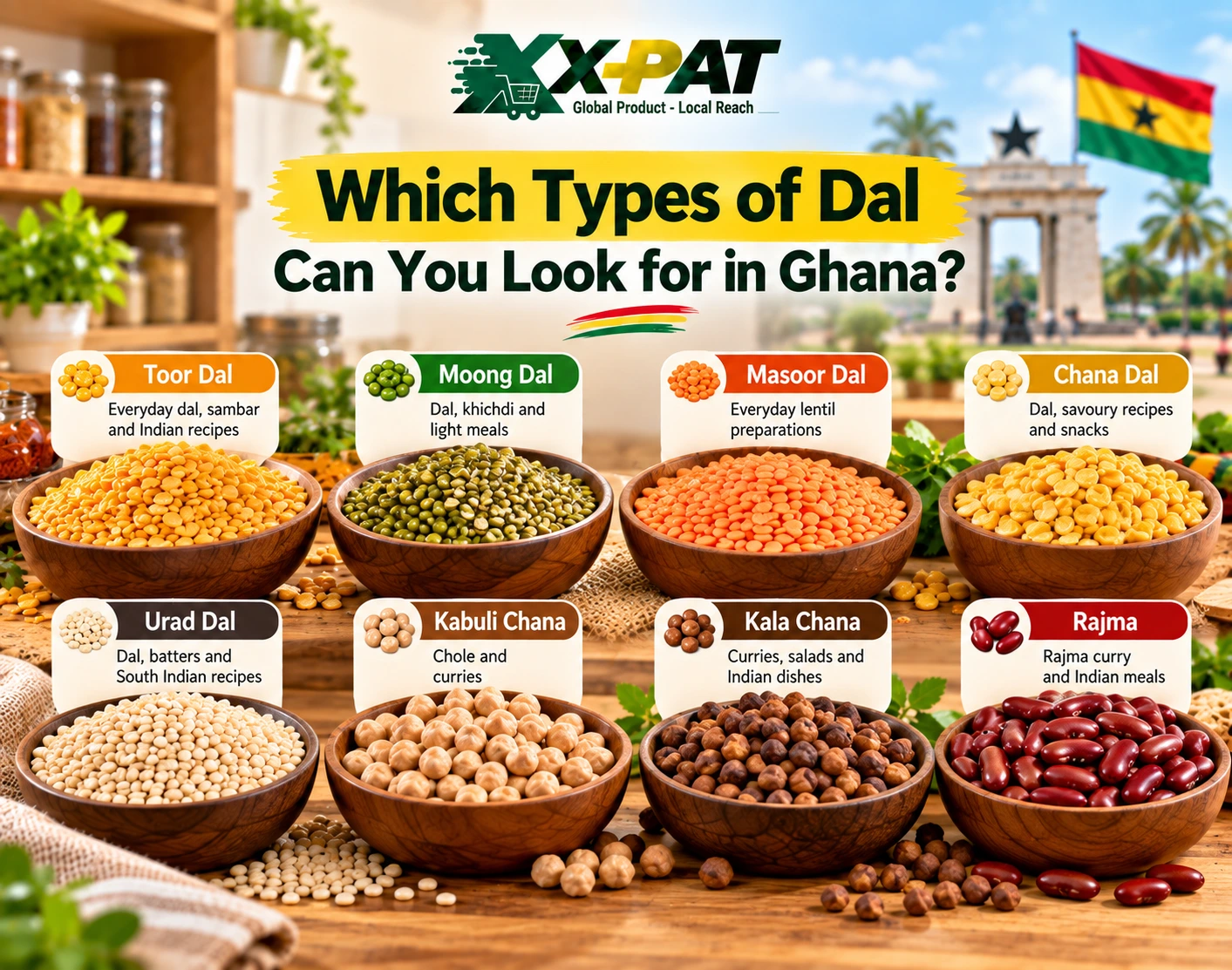
Which Types of Dal Can You Look for in Ghana?
Current Ghana grocery listings show that shoppers can encounter a fairly broad range of Indian-style pulses. For example, Neha Supermarket’s dal category currently lists chana dal, yellow and green moong, masoor dal, black urad, black and white chana and other products, while G&N Food Basket lists products including toor, urad, chana and moong dal.
Here is a useful starting guide:
Type | What to Search For | Common Indian Uses |
Toor Dal | Toor / Tuvar / Arhar Dal | Everyday dal, sambar and regional recipes |
Moong Dal | Yellow Moong / Split Moong | Dal, khichdi and light meals |
Masoor Dal | Red Masoor / Masoor | Everyday lentil preparations |
Chana Dal | Split Bengal Gram | Dal, savoury recipes and selected snacks |
Urad Dal | Urad / Black Gram | Dal, selected batters and regional dishes |
Chickpeas | Kabuli Chana / White Chana | Chole and curries |
Black Chickpeas | Kala Chana / Black Chana | Curries, salads and other preparations |
Rajma | Kidney Beans | Rajma curry |
You do not need all of these in your pantry. Start with the varieties that appear most often in your household meals.
Where Can You Buy Dal and Pulses in Ghana?
There are three practical places to explore.
1. Indian Grocery Stores
Specialist Indian grocery stores can be particularly useful when you need a specific Indian name or variety.
For example, Neha Supermarket currently has a dedicated dal category and lists its contact address at 55 Dadeban Road, Accra. Its online catalogue includes several dal and pulse varieties.
Specialist stores can also make it easier to recognise familiar product terminology such as toor, urad, moong and chana rather than searching through a general “beans and lentils” category.
2. Supermarkets and General Grocery Retailers
Larger supermarkets and grocery retailers can also carry beans, lentils and selected Indian pulses.
For example, MaxMart’s current online Beans & Pulses category includes products such as green lentils, red lentils, chickpeas, toor dal and urid dal.
The exact selection can vary considerably, so a supermarket may work well for common lentils while a specialist Indian grocery retailer may be more useful for a particular dal.
3. Online Grocery Shopping
Online shopping can save time because you can search directly for a particular variety rather than checking multiple shelves.
G&N Food Basket in Accra currently maintains a “Grains, Lentils and More” category containing multiple dal and pulse products. gnfoodbasket.com
For X-PAT shoppers, the sensible approach is similar: check the current X-PAT catalogue for the dal or pulse you need, review the pack information and confirm current availability before ordering.
Which Dal Should You Buy for Everyday Indian Cooking?
There is no single dal that every household needs.
If you regularly make simple dal-rice meals, you may prefer to keep one or two familiar varieties such as toor, moong or masoor.
If your weekly meals include khichdi, moong dal may be particularly useful.
If your family enjoys chole, add chickpeas to the shopping list.
For rajma-rice nights, kidney beans become more relevant than buying another packet of dal simply because it is available.
The better question is:
“What are we planning to cook?”
Your answer should determine what enters the grocery basket.
Toor, Moong, Masoor or Chana Dal: How Should You Choose?
Think about cooking use first.
Toor dal is widely associated with everyday Indian dal preparations and is also used in dishes such as sambar.
Moong dal is versatile and commonly used for dal and khichdi.
Masoor dal is another practical choice for straightforward lentil preparations.
Chana dal has a distinct texture and works across several Indian recipes.
Urad dal becomes particularly useful in households preparing recipes that specifically call for black gram.
If you are starting an Indian pantry in Ghana, buying two or three useful varieties can be more sensible than purchasing every type at once.
Whole or Split Pulses: Does It Matter?
Yes.
A whole pulse and its split version can behave differently during soaking and cooking and may be used in different recipes.
For example, whole green moong is not identical to yellow split moong dal. Similarly, whole urad and split urad should not automatically be treated as the same ingredient.
When shopping online, read the complete product name.
Words such as whole, split, skinned, white, black, green or yellow can tell you important information about what is actually inside the packet.
This small check can prevent you from receiving a product that looks familiar but is not right for your intended recipe.
What Should You Check Before Buying Dal Online in Ghana?
Do not select a product only because the photograph looks familiar.
Check these details:
Exact dal or pulse type: Is it toor, moong, masoor, chana or urad?
Whole or split: Make sure the format matches your recipe.
Pack size: Compare 500 g, 1 kg or other available sizes based on household consumption.
Brand and product description: Read the listing instead of relying solely on package colour.
Packaging condition: When your order arrives, check that the pack is properly sealed and in suitable condition.
Current availability: Online inventory can change.
Delivery information: Check whether delivery is available to your location and review applicable terms before checkout.
This becomes especially important when buying unfamiliar brands.
How Much Dal Should Your Family Buy?
There is no universal monthly quantity.
A family eating dal several times per week will naturally consume more than a household preparing it occasionally.
Instead of copying another family’s monthly grocery list, track your own consumption.
If a 1 kg packet lasts several weeks, use that information when planning the next order. If you regularly run out, consider whether a larger available pack would be practical.
The objective is to maintain enough stock for normal cooking without filling the pantry with products that will remain unused.
How Can You Store Dal and Pulses Properly?
Start by following the storage instructions printed on the product packaging.
After opening a packet, keeping dry pulses appropriately sealed can help protect them from moisture and contamination. Use clean, dry containers and utensils, and keep your pantry organised so older packs are used before newly purchased ones where appropriate.
Neha Supermarket’s current Tuval Dal listing, for example, advises storing the product in a cool, dry place and transferring the contents to an airtight container after opening. nehasupermarket.com
It is also useful to check your existing stock before ordering another packet.
What Else Can You Order With Dal?
Dal rarely becomes a complete Indian grocery basket by itself.
Depending on the meals you are planning, you may also need:
Rice for dal-rice or khichdi.
Atta for dal-roti combinations.
Turmeric, cumin and chilli for everyday seasoning.
Cooking oil for tadka and meal preparation.
Garam masala or recipe-specific masalas where your chosen dish calls for them.
Instead of shopping category by category, try building your order around complete meals.
For example:
Dal + rice + cumin + turmeric + oil = a basic dal-rice basket.
This approach can make Indian grocery shopping in Ghana much more organised.
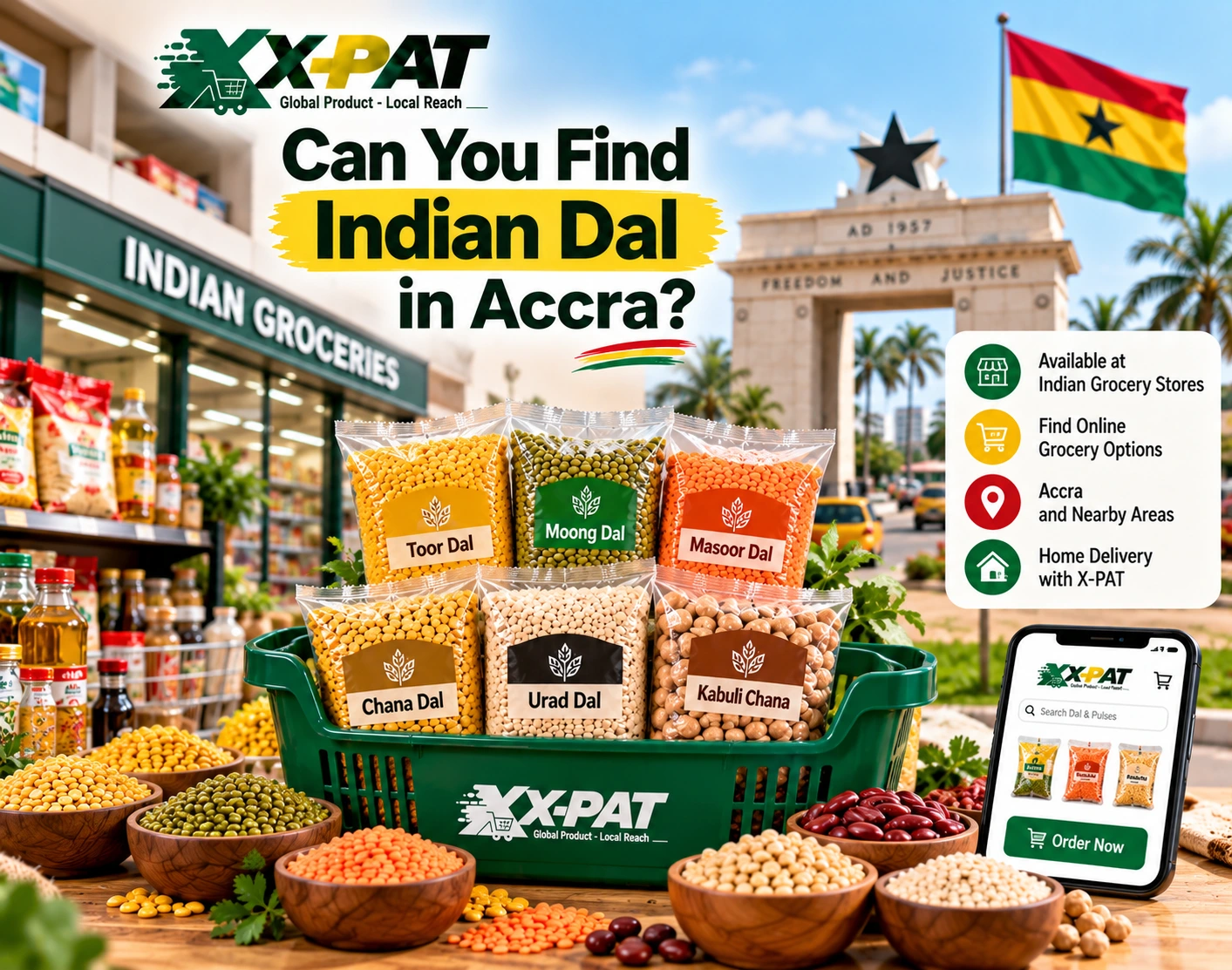
Can You Find Indian Dal in Accra?
Yes, current online evidence shows several dal and pulse options associated with Accra retailers.
Neha Supermarket lists an Accra address and maintains a dedicated online dal section, while G&N Food Basket also lists an Accra location and carries a range of lentils and pulses.
However, specific products and inventory can change. Check current availability before making a special trip or placing an order.
How Can X-PAT Fit Into Your Indian Grocery Shopping?
If you already use X-PAT for Indian groceries in Ghana, include dal and pulses in the same meal-based shopping process you use for atta, rice and spices.
Search the current catalogue for the exact pulse you need rather than assuming a particular brand or variety is available.
Then check the product name, pack size, product information and current availability.
You can also combine dal with other pantry essentials in the same planning list—for example, rice, atta, spices and cooking basics.
That makes the shopping process less about finding individual products and more about keeping your kitchen ready for the meals your household actually cooks.
A Quick Dal and Pulses Buying Checklist
Before buying, ask yourself:
- Which dal does my recipe require?
- Do I need whole or split pulses?
- What pack size will my household realistically use?
- Have I checked the exact product description?
- Do I already have an unopened pack at home?
- Can I store it appropriately?
- Is the product currently available?
- Is delivery available to my location?
A short check can prevent duplicate purchases and make your pantry more useful.
Frequently Asked Questions
Where can I buy dal in Ghana?
Dal can be found through selected Indian grocery stores, supermarkets and online grocery retailers. Current Ghana listings include several Indian dal varieties, although availability can change
Can I buy Indian pulses online in Ghana?
Yes. Some Ghana-based grocery retailers currently list dal and pulses online. Check the retailer’s live inventory, pack information and delivery terms before ordering.
Which dal should I buy for everyday cooking?
That depends on your recipes. Toor, moong and masoor are useful options for many everyday meals, while chana and urad are useful for dishes that specifically call for them.
Is toor dal available in Ghana?
Yes, current Ghana online listings include toor dal products, although brands, prices and stock can change.
Can I find moong dal in Ghana?
Current Ghana grocery listings include yellow and green moong products. Check live availability before ordering.