
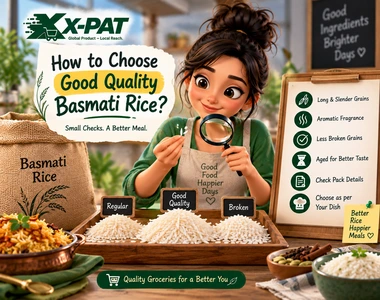
How to Identify High-Quality Basmati Rice Before You Buy
How can you choose good-quality basmati rice? Look for long, slender and relatively uniform grains, a characteristic aroma, minimal broken grains, clear packaging information and a variety suited to your recipe. Ageing can also affect aroma, grain separation and cooking performance. When shopping online, compare the rice type, pack size, product details and current price rather than choosing by brand or packaging alone.
Basmati rice can transform a simple meal, but two packets labelled “basmati” can produce noticeably different results in the kitchen.
One may cook into long, fluffy and separate grains, while another may be better suited to everyday rice dishes. Some products emphasize ageing and extra-long grains, while others are designed to offer a more practical option for regular household cooking.
For shoppers looking for basmati rice in Ghana, understanding these differences can make online grocery shopping much easier.
Here is a practical guide to choosing a basmati pack that actually fits your meal.
What Does Good-Quality Basmati Rice Look Like?
Start with the grain itself.
Basmati is known for its long, slender appearance. When evaluating uncooked rice, look for grains that appear relatively consistent in shape and size.
A good pack should not appear to contain an unusually high proportion of broken grains unless the product is specifically sold as a broken or shorter-grain grade.
Three visual characteristics are particularly useful:
Length: Basmati grains are generally long and slender.
Uniformity: A relatively consistent appearance can make cooking more predictable.
Grain integrity: If you’re purchasing rice for presentation-focused dishes, a higher proportion of intact grains is desirable.
However, don’t assume that every shorter basmati product is poor quality. Different basmati grades exist for different uses and price points.
The question should always be: Does this rice match what I want to cook?
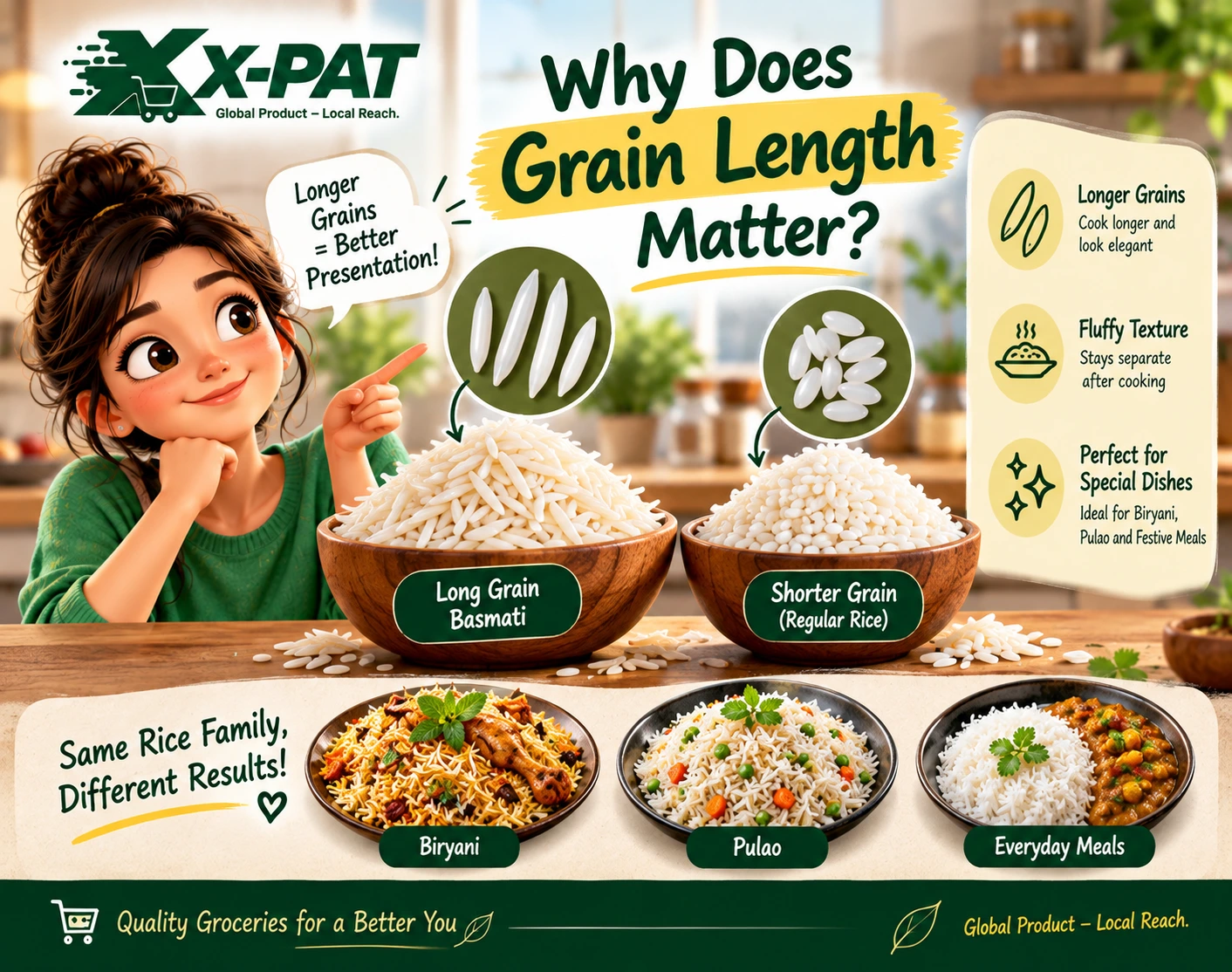
Why Does Grain Length Matter?
Grain length is one of the first characteristics shoppers associate with basmati.
Premium long-grain and extra-long-grain varieties are particularly attractive for dishes where the rice itself is visually important.
Think about biryani.
When the lid is opened, you want to see individual grains layered with spices, herbs and other ingredients. Long grains can create the characteristic appearance many people associate with the dish.
But maximum grain length isn’t necessary for every meal.
For everyday dal and rice, curry and rice, or a simple weekday lunch, you may prefer a practical basmati variety rather than paying primarily for presentation.
A simple way to think about it is:
Your Meal | What to Prioritize |
Biryani | Long/extra-long grains, separation |
Pulao | Aroma, slender grains, fluffy texture |
Curry & Rice | Consistent cooking, aroma |
Dal & Rice | Everyday usability and texture |
Special Occasions | Grain length, aroma, presentation |
Regular Family Meals | Pack size, consistency and value |
The right rice depends on the job you want it to do.
Does Aged Basmati Rice Make a Difference?
You may notice words such as “aged” or a specific ageing period on some basmati packages.
Ageing is important because rice changes during storage under controlled conditions. Lower moisture content can affect how the grains behave during cooking.
For shoppers, aged basmati is commonly associated with characteristics such as better grain separation, elongation and a distinctive aroma.
This can be especially useful for biryani, pulao and other dishes where separate grains matter.
But there is an important distinction:
Older does not automatically mean better for every customer.
If you’re buying rice for regular household meals, you may not need to pay for the same characteristics someone wants for a special biryani.
Instead, look at ageing as one factor among several, rather than as the only sign of quality.
How Important Is Aroma When Choosing Basmati?
Aroma is part of what makes basmati distinctive.
When cooked, basmati develops a characteristic fragrance that separates the eating experience from many ordinary rice varieties.
If you already use basmati regularly, you’ll probably recognize this aroma immediately.
When purchasing a sealed packet online, of course, you cannot smell the rice before ordering. That makes the product description and packaging information more important.
Look for clear information about:
- Rice variety
- Grain characteristics
- Ageing, if applicable
- Recommended culinary use
- Manufacturer or brand
- Net weight
- Cooking instructions
The more clearly a product explains what you’re buying, the easier it becomes to compare options.
Should Good Basmati Rice Have Broken Grains?
Some broken grains can occur during rice processing, but the amount matters depending on the grade and product you’re purchasing.
For dishes such as biryani, where appearance is important, shoppers often prefer a high proportion of intact long grains.
However, broken or shorter-grain basmati products aren’t automatically undesirable.
They may be deliberately sold as different grades and can work well for everyday meals where dramatic grain length isn’t a priority.
This is why it is useful to distinguish between:
Quality problem: A product does not match the quality or grade it claims to offer.
Different grade: The rice is intentionally sold as a shorter or broken-grain option.
Understanding that difference can prevent you from paying extra for features you don’t actually need.
What Should You Read on a Basmati Rice Pack?
Packaging is more than branding.
Before buying, check the information printed on the pack or displayed on the online product page.
Pay attention to the product name and variety first. “Basmati rice” alone may not tell you everything. Some products identify themselves as extra-long grain, everyday basmati, biryani rice or another specific range.
Next, check the net weight.
A lower-priced bag may simply contain less rice, so comparing only the final price can be misleading.
Also look for manufacturing and packaging information, storage instructions, country-of-origin information where provided, and any clearly stated ageing information.
If you’re shopping online, make sure the product page and the package shown appear consistent.
How Can You Judge Basmati Rice After Cooking?
The real test comes in the kitchen.
Good basmati for dishes requiring separate grains should generally cook into elongated grains that maintain their structure when prepared correctly.
Consider these characteristics:
Elongation: Do the grains become noticeably longer?
Separation: Do they remain relatively distinct rather than forming an overly sticky mass?
Aroma: Does the cooked rice have the fragrance you expect from basmati?
Texture: Is the rice pleasant for the dish you’re preparing?
Consistency: Do the grains cook relatively evenly?
Remember that cooking technique also matters.
Even high-quality rice can produce disappointing results if too much water is used, the rice is overcooked or the cooking method doesn’t suit that particular variety.
So judge both the product and your cooking method.
Is Expensive Basmati Always Better Quality?
No.
Price and quality are related in some cases, but they aren’t interchangeable.
The price of imported basmati rice can be influenced by the brand, grain grade, ageing, pack size, processing, import costs and retailer pricing.
Instead of asking:
“Which packet costs the most?”
Ask:
“Which characteristics am I paying for?”
If one product costs more because it offers extra-long aged grains and you’re preparing biryani for a special occasion, those characteristics may be valuable.
If you’re buying rice for everyday family meals, another product may better suit your needs.
This is a much smarter way to understand affordable groceries in Ghana: value is about what you receive for your money, not simply finding the lowest number on the price tag.
How Should You Compare Different Basmati Brands?
Brand reputation can provide a useful starting point, but it shouldn’t replace product comparison.
Even the same brand may sell several basmati ranges designed for different customers.
Compare products using a simple checklist:
Check | Why It Matters |
Rice Variety | Tells you what type you’re buying |
Grain Length | Important for presentation |
Ageing | May influence aroma and cooking behaviour |
Broken Grains | Relevant to appearance and grade |
Pack Size | Should match household usage |
Price per kg | Makes different pack sizes easier to compare |
Cooking Purpose | Helps match rice to the recipe |
Product Information | Helps you make an informed purchase |
This approach is more useful than saying one brand is always better than another.
How Can You Calculate the Better-Value Pack?
Pack sizes can make price comparison confusing.
Suppose one product is available in a smaller bag while another comes in a larger family pack. Looking only at the total price doesn’t tell you which offers better value.
Instead, calculate:
Price per kg = Pack price ÷ Pack weight in kilograms
For example, if you are comparing a 1kg pack with a 5kg pack, price per kilogram gives you a more consistent basis for comparison.
But don’t stop there.
A cheaper price per kilogram doesn’t necessarily make it the right purchase if you don’t like the rice or cannot use the larger quantity before quality deteriorates.
Consider price + quality + usage together.
Which Pack Size Should You Choose?
Buying the biggest bag isn’t always the smartest decision.
A small pack can make sense when you’re trying a new brand, testing a different basmati variety or only cooking basmati occasionally.
A larger pack may be more convenient for families that regularly prepare rice.
Before choosing, consider:
How often do you cook rice?
How many people are you feeding?
Do you have appropriate dry storage space?
Have you used this particular rice before?
If you’re trying an unfamiliar product, testing a smaller quantity first can help you learn how it cooks before committing to a larger pack.

What Should You Check When Buying Basmati Rice Online in Ghana?
Online shopping changes the way you evaluate rice because you cannot physically inspect the product before ordering.
When looking for basmati rice online in Ghana, check the product page carefully.
Confirm the exact product name, rice variety, pack size and current price. Read the product description and examine available package images.
Also check the current delivery information for your location before completing checkout.
Avoid relying on an old blog article for live stock or pricing. Imported grocery availability can change, so the retailer’s current catalogue should be your final reference.
For shoppers in Accra and other supported areas, this becomes especially important when planning a larger grocery order.
Can X-PAT Make Basmati Shopping Easier in Ghana?
If you’re already searching for Indian groceries in Ghana, online shopping can make it easier to compare rice alongside the ingredients you need to complete a meal.
Through X-PAT, shoppers can check the current catalogue for available grocery products rather than travelling between multiple stores looking for individual Indian ingredients.
For example, someone preparing biryani may need more than rice. Their grocery list might also include spices, cooking essentials and other pantry products.
Someone planning weekly family meals might combine rice with pulses, flour, beverages, snacks and household essentials.
The important point is to check the live X-PAT catalogue for current products, pack sizes and ordering information.
X-PAT — Global Product, Local Reach.
A Simple 7-Point Basmati Quality Check
Before adding your next pack to the cart, remember:
- Check the grain — Look at length, shape and uniformity.
- Check the variety — Understand whether you’re buying everyday, long-grain, extra-long or another basmati grade.
- Look for ageing information — Especially when buying rice for dishes where grain separation matters.
- Consider broken grains — Particularly for presentation-focused meals.
- Match rice to the dish — Biryani and everyday dal-rice don’t necessarily require the same product.
- Compare price per kilogram — Not just the total pack price.
- Verify current product details — Especially when buying online.
This turns rice shopping from guesswork into a much more informed decision.
Choose the Rice for the Meal, Not Just the Packaging
Choosing good-quality basmati becomes much easier when you know what you’re actually looking for.
Start with the grain, then consider ageing, aroma, grain integrity, intended dish, pack size and price per kilogram. Finally, check how the rice performs when cooked.
Most importantly, don’t assume that one basmati pack is perfect for every situation.
The rice you choose for an impressive biryani may be different from the rice you want for everyday family meals—and that’s completely reasonable.
For shoppers exploring online grocery shopping in Ghana, comparing these characteristics before ordering can help make each purchase more informed.
Check the current X-PAT grocery selection when you’re ready to explore basmati rice and other Indian grocery essentials for your kitchen.
Better rice shopping starts with knowing what matters.
Frequently Asked Questions About Choosing Basmati Rice
How can I identify good-quality basmati rice?
Look for long, slender and relatively uniform grains, appropriate grain integrity, clear product information and characteristics suited to your recipe. Aroma, ageing and cooking performance can also help distinguish different basmati products.
Is aged basmati rice better?
Aged basmati can offer characteristics such as grain separation, elongation and distinctive aroma that are desirable for certain dishes. However, whether it is a better choice depends on your recipe, preferences and budget.
Which basmati rice is suitable for biryani?
For biryani, look for long or extra-long grains, good grain separation and a variety intended to hold its structure during cooking. Aged basmati is also commonly considered for this type of dish.
Should basmati rice be long and thin?
Long, slender grains are characteristic of basmati, although different grades and varieties can vary in length. Shorter or broken-grain basmati products can also exist for different cooking needs and price points.
Does expensive basmati mean better quality?
Not necessarily. Price can reflect grain grade, ageing, brand, pack size, import costs and other factors. Compare the product’s characteristics with your cooking needs rather than judging quality by price alone.