Toor Dal, Moong Dal or Chana Dal? Understand the Difference Before You Buy
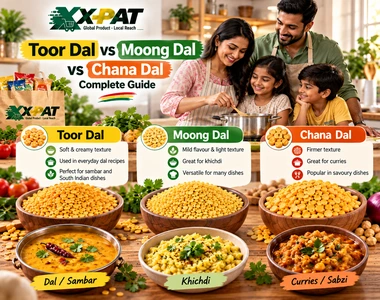
Toor dal, moong dal and chana dal are three popular Indian pulses, but they differ in taste, texture, appearance and the recipes in which they are commonly used. Toor dal works well in many everyday dal preparations, moong dal is versatile for dishes such as dal and khichdi, while chana dal has a firmer texture and is commonly used in dals, curries and savoury recipes.
For Indian families and home cooks in Ghana, understanding these differences can make grocery shopping easier and help you choose a dal based on what you actually plan to cook.
What Is the Main Difference Between Toor Dal, Moong Dal and Chana Dal?
All three are pulses, but they come from different legumes and do not produce exactly the same result when cooked.
Toor dal, also called tuvar or arhar dal, is split pigeon pea. It is widely used in Indian households for everyday dal and several regional recipes.
Moong dal generally refers to split mung beans. Yellow moong dal is commonly used for simple dal, khichdi and several other dishes. Whole green moong is another form of the same pulse, but it behaves differently in cooking.
Chana dal is split Bengal gram. It is thicker and firmer than many commonly cooked dals and works particularly well in recipes where a more noticeable texture is preferred.
Understanding these basic differences is more useful than choosing a packet only by its colour.
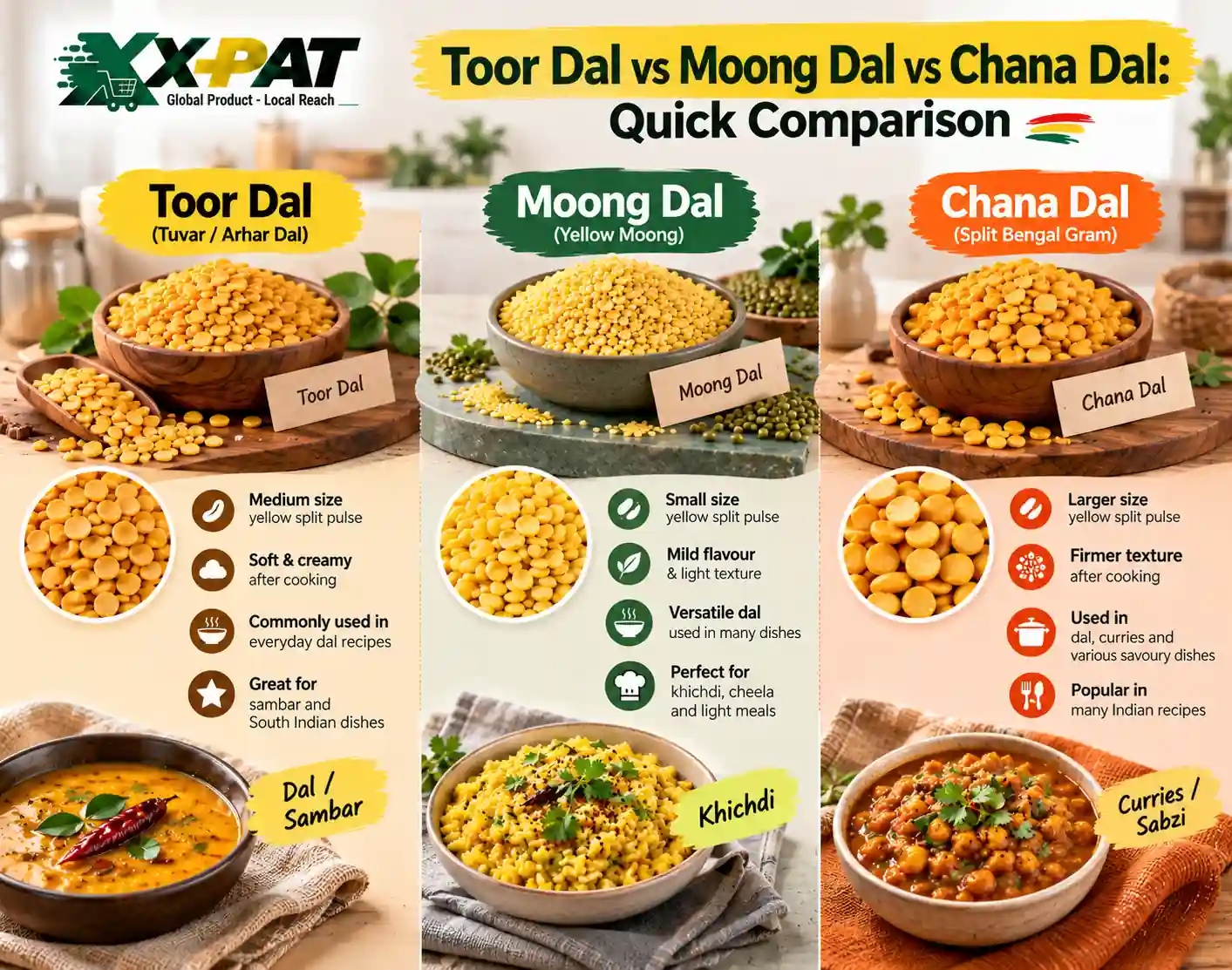
Toor Dal vs Moong Dal vs Chana Dal: Quick Comparison
Feature | Toor Dal | Moong Dal | Chana Dal |
Also Known As | Tuvar Dal, Arhar Dal | Yellow Moong, Split Moong | Split Bengal Gram |
Appearance | Yellow split pulse | Small yellow split pulse | Larger yellow split pulse |
Texture After Cooking | Soft and creamy | Soft and relatively smooth | Firmer and slightly grainier |
Common Uses | Dal, sambar, regional dishes | Dal, khichdi, cheela and light meals | Dal, curries and savoury dishes |
Cooking Style | Everyday household cooking | Quick everyday recipes | Recipes needing more texture |
Pantry Role | Regular dal staple | Versatile staple | Recipe-specific + regular staple |
The right option depends primarily on the recipe you are preparing.
What Is Toor Dal?
Toor dal is one of the familiar dals used across Indian regional cuisines. Depending on where you come from, you may know it as toor dal, tuvar dal or arhar dal.
Once cooked properly, it becomes soft and can develop a smooth, comforting consistency. This makes it suitable for straightforward dal preparations as well as dishes in which cooked dal forms the base of a larger recipe.
It is commonly associated with dishes such as dal-rice, dal tadka variations, sambar and several regional preparations.
If your household regularly cooks traditional Indian meals, toor dal can be a practical pantry ingredient.
When shopping for toor dal in Ghana, pay attention to the complete product name because different brands may use “toor,” “tuvar” or “arhar.”
What Is Moong Dal?
Moong dal comes from mung beans and is available in different forms.
You may see:
Yellow split moong dal
Split green moong
Whole green moong
These should not automatically be treated as identical ingredients.
Yellow moong dal is especially convenient for simple dal preparations and khichdi. Because it can become soft when cooked, it is also useful for recipes where you do not want a very firm pulse texture.
Whole green moong, on the other hand, retains its outer layer and is used differently in many recipes.
This is why shoppers looking for moong dal in Ghana should check whether a packet contains whole, split or skinned moong before adding it to the basket.
What Is Chana Dal?
Chana dal is made from split Bengal gram.
Compared with yellow moong dal, its individual pieces are generally larger and it tends to maintain a more noticeable texture during cooking.
It is commonly used in dal preparations, curries and several savoury Indian recipes. Chana dal can also appear in regional dishes where the pulse itself needs to remain more distinct rather than completely disappearing into a smooth dal.
Do not confuse chana dal with kabuli chana.
Kabuli chana refers to the larger light-coloured chickpeas commonly used for dishes such as chole, whereas chana dal is a split pulse.
Checking the exact product name can prevent this common grocery-shopping mistake.
Which Dal Is Better for Everyday Dal?
There is no single correct answer because Indian households prepare dal differently.
If your usual family recipe specifically uses toor dal, choosing toor makes sense.
For a simple yellow moong dal preparation, moong is naturally the appropriate choice.
Chana dal works well when the recipe calls for a firmer pulse and more defined texture.
Instead of asking which dal is universally better, ask:
What type of dal does my recipe require?
That question usually leads to a more useful buying decision.
Which Dal Works Well for Khichdi?
Moong dal is frequently used in khichdi recipes.
A basic khichdi may combine rice, moong dal, water and seasonings, although ingredients and consistency differ significantly between households and regions.
That does not mean moong is the only pulse that can ever appear in khichdi. Indian cooking has numerous regional and family variations.
If you are following a particular recipe, match the dal to that recipe instead of automatically substituting whatever is already in your pantry.
This is especially important when cooking for the first time because changing the pulse may also change cooking time, texture and flavour.
Which Dal Is Commonly Used for Sambar?
Toor dal is commonly used as the pulse base for many sambar recipes.
The cooked dal is combined with vegetables, spices, souring ingredients and a tempering according to the recipe or regional style being followed.
Again, Indian cuisine is highly diverse, so recipes vary.
If sambar appears regularly in your family’s meal plan, keeping toor dal available can therefore be useful.
For shoppers building an Indian pantry in Ghana, planning purchases around recurring dishes like sambar is much more practical than buying several pulses without a clear use.
Does Toor Dal Taste Different From Moong and Chana Dal?
Yes. Their flavours are related to the wider pulse family, but they are not identical.
Toor dal develops its own characteristic flavour and pairs well with common Indian tadka ingredients.
Yellow moong has a comparatively mild flavour that works across simple preparations.
Chana dal has a stronger presence in the finished dish because of both its flavour and firmer texture.
Seasonings also influence the final taste significantly.
Cumin, mustard seeds, turmeric, chilli, asafoetida, garlic, ginger, coriander and other ingredients can completely change the character of a dal recipe.
Therefore, the pulse provides the foundation while the recipe determines much of the final flavour.
Does Cooking Time Differ Between These Dals?
Yes, cooking behaviour can differ depending on the pulse, whether it has been split or skinned, soaking, cooking equipment, quantity and desired consistency.
Moong dal generally softens readily, while chana dal usually needs more cooking to reach a soft consistency.
Toor dal also needs to be cooked thoroughly for the soft texture expected in many traditional preparations.
Rather than relying on one fixed cooking time for every brand and kitchen, follow the preparation instructions on the package and the recipe you are using.
If using a pressure cooker or another appliance, follow the appliance manufacturer’s instructions as well.
Can You Replace One Dal With Another?
Sometimes a substitution may produce an acceptable meal, but the result will not necessarily be the same.
Replacing toor dal with moong dal can change the flavour and texture.
Replacing moong with chana dal may make the dish noticeably firmer and may affect preparation requirements.
Substitution is therefore easier in flexible home recipes than in dishes where a particular pulse defines the expected result.
If you are cooking a familiar traditional recipe, buying the specified dal is usually the simplest way to achieve the intended character.
Which Dal Should Indian Families in Ghana Keep at Home?
Your pantry should reflect your household’s actual cooking habits.
A family regularly preparing dal-rice, sambar and khichdi may find both toor and moong useful. If chana dal dishes are part of the weekly or monthly menu, adding chana dal makes sense too.
However, there is little benefit in stocking every type simply because it is an Indian grocery staple.
A practical pantry might start with:
One frequently used everyday dal
Choose the pulse your family cooks most often.
One versatile second option
This gives you variety across different meals.
Recipe-specific pulses
Buy these when they are part of your upcoming meal plan.
This approach can help families avoid overbuying Indian groceries.
How Much Dal Should You Buy?
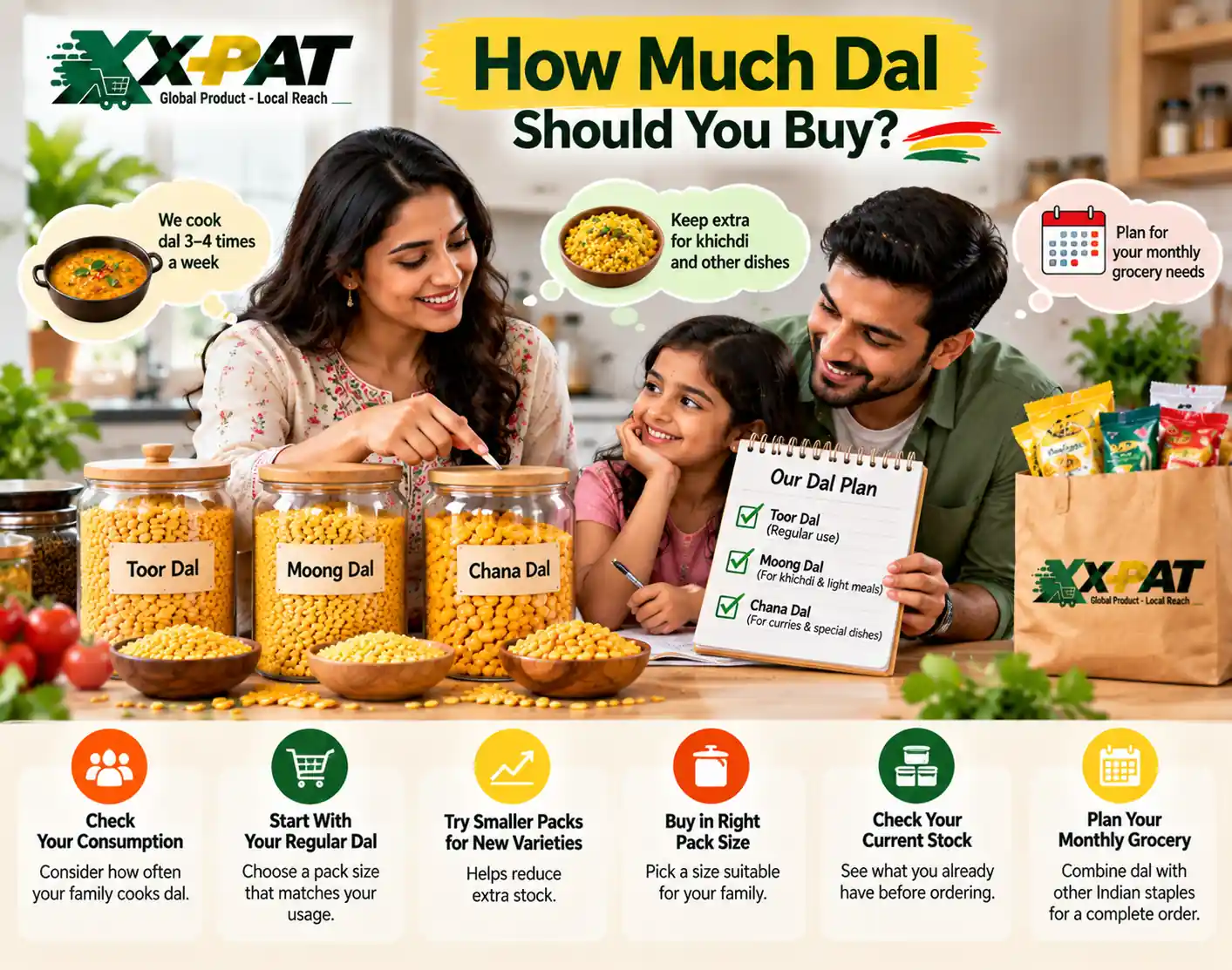
Pack size should depend on consumption rather than assumptions.
Before ordering, check how much dal is already in your kitchen and estimate how frequently your family will cook it.
If you are trying a variety for the first time, a smaller available pack can reduce unnecessary pantry stock.
For a dal your household cooks regularly, a larger available pack may be more practical if you can store it appropriately.
This is particularly useful when planning Indian grocery shopping in Ghana, where families may want to combine several pantry staples into an organised grocery order.
What Should You Check When Buying Dal Online in Ghana?
When shopping online, product photos should not be the only thing you check.
First, read the exact product name. Toor may also appear as tuvar or arhar. Moong may be whole, split or yellow. Chana dal should not be confused with whole chickpeas.
Next, check the pack size. A product that initially appears less expensive may simply be a smaller packet, so compare quantities carefully.
Check the brand and variant as well. Similar packaging does not necessarily mean two products contain the same pulse.
You should also review the product information, packaging details and current availability shown at the time of purchase.
For X-PAT shoppers, checking these details before adding a product to the cart can make online Indian grocery shopping more organised.
How Should You Store Dal and Pulses at Home?
Storage begins with the instructions printed on the original package.
Generally, dry pulses should be protected from moisture and contamination. Once a packet has been opened, an appropriate clean, dry and properly closed food-storage container can make pantry organisation easier.
Try to keep older stock visible instead of placing every newly purchased packet in front of it.
Before making the next grocery order, quickly inspect your pantry.
You may discover that you already have enough moong dal but need to replenish toor dal. This simple habit can reduce duplicate purchases and make monthly grocery planning more accurate.
What Should You Buy Along With Dal?
Dal becomes more useful when you plan around complete meals.
For dal and rice, your shopping basket might include dal, rice, cooking oil and the spices required by your recipe.
For dal and roti, you may need atta along with your preferred pulse and seasonings.
For khichdi, rice and moong dal can form the foundation, followed by spices and other ingredients based on your household recipe.
For sambar, toor dal can be paired with the additional ingredients required for your preferred preparation.
This meal-based strategy is more useful than adding unrelated grocery products to your basket simply because they are available.
How Can X-PAT Make Dal Shopping More Organised?
When exploring Indian groceries in Ghana, X-PAT shoppers can approach dal shopping by starting with the meal rather than the product.
Decide whether you are preparing dal-rice, khichdi, sambar, dal-roti or another recipe. Then identify whether you need toor dal, moong dal, chana dal or another pulse.
Check the current X-PAT catalogue for the required product, variant and pack size. Because product availability can change, confirm the current listing when placing your order rather than assuming a particular brand or pack is always available.
You can then build the rest of your grocery basket around the same meal plan with relevant staples such as rice, atta, spices and cooking essentials.
This creates a more purposeful shopping experience and helps keep the family pantry organised.
Toor Dal vs Moong Dal vs Chana Dal: Which One Should You Choose?
The simplest answer is to choose according to your recipe and preferred texture.
Choose toor dal when your recipe specifically calls for toor, tuvar or arhar, including many everyday dal and sambar preparations.
Choose moong dal for recipes such as simple moong dal and many styles of khichdi, or when the recipe specifically requires yellow or split moong.
Choose chana dal when you want the distinctive texture and flavour of split Bengal gram or when it is specified in your recipe.
You do not have to pick one and abandon the others. They serve different purposes and can comfortably exist in the same Indian pantry.
Build a Smarter Indian Pantry With X-PAT
The toor dal vs moong dal vs chana dal comparison does not need a single winner. Each pulse has its own place in Indian cooking.
Toor dal suits many traditional everyday preparations, moong dal works across simple dal and khichdi recipes, and chana dal brings a firmer texture to a different range of dishes.
For families shopping for Indian groceries in Ghana, the easiest strategy is simple: plan the meal, identify the dal, check the pack size and then complete your grocery basket.
With X-PAT, you can explore the current grocery catalogue and organise your Indian pantry around the meals your family actually enjoys.
Frequently Asked Questions
Is toor dal the same as moong dal?
No. Toor dal comes from pigeon peas, while moong dal comes from mung beans. Their flavour, size, texture and cooking behaviour differ.
Is chana dal the same as chickpeas?
Chana dal is split Bengal gram. It should not be confused with the large, light-coloured kabuli chickpeas commonly used for chole.
Which dal is commonly used for khichdi?
Moong dal is frequently used in many khichdi recipes, although regional and household recipes vary.
Which dal is commonly used for sambar?
Toor dal is commonly used as the pulse base in many sambar preparations.
Can I use moong dal instead of toor dal?
You can substitute pulses in some flexible recipes, but the flavour, consistency and cooking behaviour may change.