
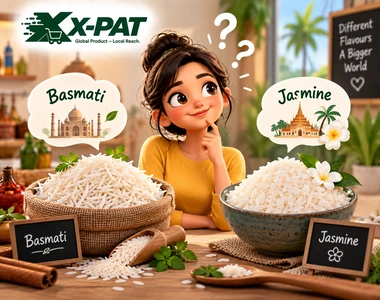
Basmati or Jasmine Rice: Which Aromatic Rice Belongs in Your Next Meal?
How are basmati rice and jasmine rice different? Both are aromatic long-grain rice varieties, but they differ noticeably in aroma, grain shape, texture and traditional uses. Basmati typically cooks into longer, more separate grains and is strongly associated with Indian and South Asian dishes. Jasmine rice is generally softer, slightly stickier and closely associated with Thai and Southeast Asian cooking.
Rice may look like a simple pantry staple, but choosing the right variety can completely change the texture and character of a meal. This becomes especially important when shopping for imported rice or Indian groceries in Ghana, where customers may see basmati and jasmine rice next to each other and wonder whether they can be used interchangeably.
Both can be excellent choices. The useful question isn’t which one is universally better—it’s which rice matches the dish you’re preparing.
Let’s compare them in a practical way.
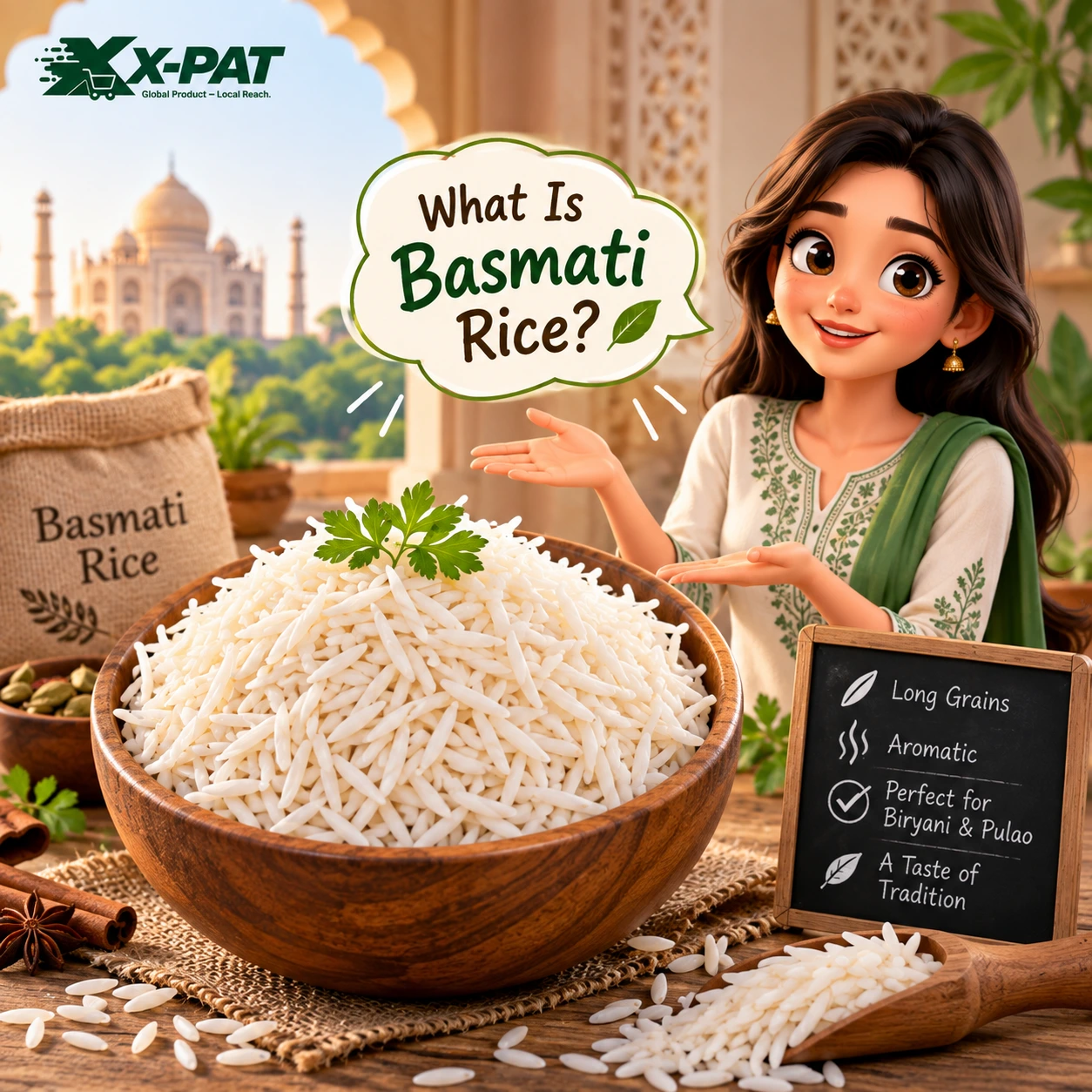
What Is Basmati Rice?
Basmati is an aromatic long-grain rice traditionally associated with the Indian subcontinent. One of its most recognizable characteristics is its slender grain.
When cooked correctly, basmati grains elongate considerably while generally remaining relatively separate rather than clumping together.
Its aroma is another defining feature. Cooked basmati has a distinctive fragrance that works especially well with dishes containing spices, herbs, vegetables, meat and rich gravies.
This is one reason basmati is commonly associated with dishes such as:
- Biryani
- Pulao
- Jeera rice
- Curries with rice
- Dal and rice
- Indian festive meals
Different basmati products can also vary considerably. You may encounter everyday basmati, aged basmati, extra-long grain varieties and products specifically positioned for biryani or pulao.
So even within the basmati category, there isn’t just one type of rice.
What Is Jasmine Rice?
Jasmine rice is another aromatic long-grain rice, strongly associated with Thailand and Southeast Asian cuisine.
Its grains are generally not as long and slender as premium basmati. Once cooked, jasmine rice tends to have a soft, moist and slightly sticky texture.
That slight stickiness is not necessarily a problem—it is actually one of the characteristics that makes jasmine rice work well with many Southeast Asian dishes.
Jasmine rice is commonly paired with:
- Thai curries
- Stir-fries
- Grilled meat
- Vegetable dishes
- Southeast Asian-style meals
- Simple rice bowls
Its aroma is often described differently from basmati’s, so although both belong to the broad category of aromatic rice, they don’t create exactly the same sensory experience.
Basmati Rice vs Jasmine Rice: What Are the Main Differences?
Here is a simple comparison:
Feature | Basmati Rice | Jasmine Rice |
Grain Shape | Long and slender | Long but generally shorter and fuller |
Cooked Texture | Fluffy and relatively separate | Soft and slightly sticky |
Aroma | Distinctive aromatic fragrance | Fragrant, with a different aromatic profile |
Grain Behaviour | Elongates significantly when cooked | Becomes softer and more tender |
Common Cuisine | Indian and South Asian | Thai and Southeast Asian |
Popular Uses | Biryani, pulao, curry, dal-rice | Thai curry, stir-fries, rice bowls |
Typical Eating Experience | Light, separate grains | Soft, moist grains |
The biggest practical difference for most home cooks is texture.
If you want visibly long, separate grains, basmati is usually the more suitable style. If your dish works better with soft rice that holds together slightly, jasmine can be a better match.
Why Does Basmati Rice Become Longer When Cooked?
One of the reasons people notice basmati immediately is what happens during cooking.
High-quality long-grain basmati can expand primarily in length, creating the elegant elongated grains often seen in biryani and pulao.
This matters visually as well as texturally.
Imagine a layered biryani. The rice isn’t simply a background ingredient—the individual grains are part of the presentation. Long, separated grains allow spices, herbs, vegetables and meat to remain visually distinct.
Jasmine rice behaves differently. It becomes tender and slightly more cohesive, which is useful for dishes where you want rice to be easy to pick up alongside curry, vegetables or meat.
Neither behaviour is inherently better. They serve different culinary purposes.
Which Rice Has the Better Aroma?
This is largely a matter of preference.
Both basmati and jasmine are classified as aromatic rice varieties, but their fragrances are not identical.
Basmati has the characteristic fragrance people often associate with Indian rice dishes. Ageing can also influence the aroma and cooking characteristics of basmati.
Jasmine rice has its own recognizable fragrance associated with Thai-style rice.
If you regularly eat Indian food, the smell of basmati may feel more familiar. If you frequently cook Thai or Southeast Asian meals, jasmine rice may feel more natural.
Instead of asking which aroma is stronger or “better,” think about which fragrance complements your recipe.
Which Rice Is Better for Biryani?
For traditional-style biryani, basmati is generally the more appropriate choice because the dish benefits from long, separate grains.
Biryani involves multiple components—rice, spices, herbs and often vegetables or meat. Depending on the recipe, the rice may also undergo partial cooking before the final layered cooking process.
A basmati variety with good grain elongation and separation is therefore particularly useful.
When buying rice specifically for biryani, check for:
Long or extra-long grains: They contribute to the characteristic presentation.
Ageing information: Some basmati products are aged to influence cooking characteristics and aroma.
Grain integrity: Look for rice with a high proportion of intact grains.
Cooking instructions: Different varieties may require slightly different soaking times and water ratios.
For shoppers exploring basmati rice in Ghana, reading these details can be more useful than choosing a packet based only on brand recognition.
Which Rice Works Better with Curry?
This depends on the curry.
Basmati works particularly well with many Indian curries because its relatively separate grains can absorb sauce while maintaining their structure.
Jasmine rice works naturally with many Thai curries because its softer, slightly sticky texture pairs well with those sauces.
For example:
Indian curry + basmati is a natural combination.
Thai curry + jasmine rice is another natural combination.
That doesn’t mean you cannot experiment. It simply means the traditional pairings developed partly because the rice texture complements the style of food.
Does Jasmine Rice Taste the Same as Basmati?
No.
Even without adding spices, the two rice varieties can produce different eating experiences because aroma, grain structure and cooked texture affect how we perceive the rice.
Basmati generally provides a lighter, more separated mouthfeel.
Jasmine is typically softer and slightly more cohesive.
This distinction becomes even more obvious when rice is served simply alongside vegetables or lightly seasoned dishes.
If you are switching from one variety to the other for the first time, don’t expect the final dish to taste or feel exactly the same.
Can You Substitute Jasmine Rice for Basmati Rice?
You can in some everyday meals, but you should expect a different result.
For a simple rice-and-curry dinner, substituting one for the other may be perfectly acceptable if that is what you have available.
For recipes where rice texture is central to the dish, substitution can make a bigger difference.
For example, using jasmine rice in a traditional biryani may produce softer, more cohesive grains than you expect. Similarly, using very dry and separate basmati in a dish designed around soft jasmine rice changes the intended texture.
A useful rule is:
Casual meal → substitution may work.
Rice-focused traditional recipe → use the rice specified by the recipe whenever possible.
Is Basmati Rice Always More Premium?
No.
“Basmati” describes a category of rice, not a guarantee that every packet has identical quality.
Basmati products can differ in:
- Grain length
- Ageing
- Broken-grain percentage
- Variety
- Processing
- Packaging
- Brand positioning
- Pack size
This is why shoppers may see significant differences between two basmati products.
The same general principle applies when comparing rice varieties: don’t assume the most expensive packet automatically gives you the best result for your recipe.
A better approach is to compare rice characteristics + intended dish + pack size + current price.
Does Aged Basmati Rice Make a Difference?
Ageing is commonly associated with premium basmati products.
As rice ages under controlled conditions, its moisture content and cooking behaviour can change. For the shopper, the relevant point is that aged basmati is often selected when aroma, grain separation and elongation are priorities.
However, you don’t necessarily need premium aged basmati for every meal.
If you’re preparing a special biryani where the rice itself is a major feature, it may be worth considering.
For an ordinary weekday curry-and-rice meal, an everyday basmati variety may meet your needs perfectly well.
This is another reason to shop according to purpose, rather than assuming one rice should be used for everything.
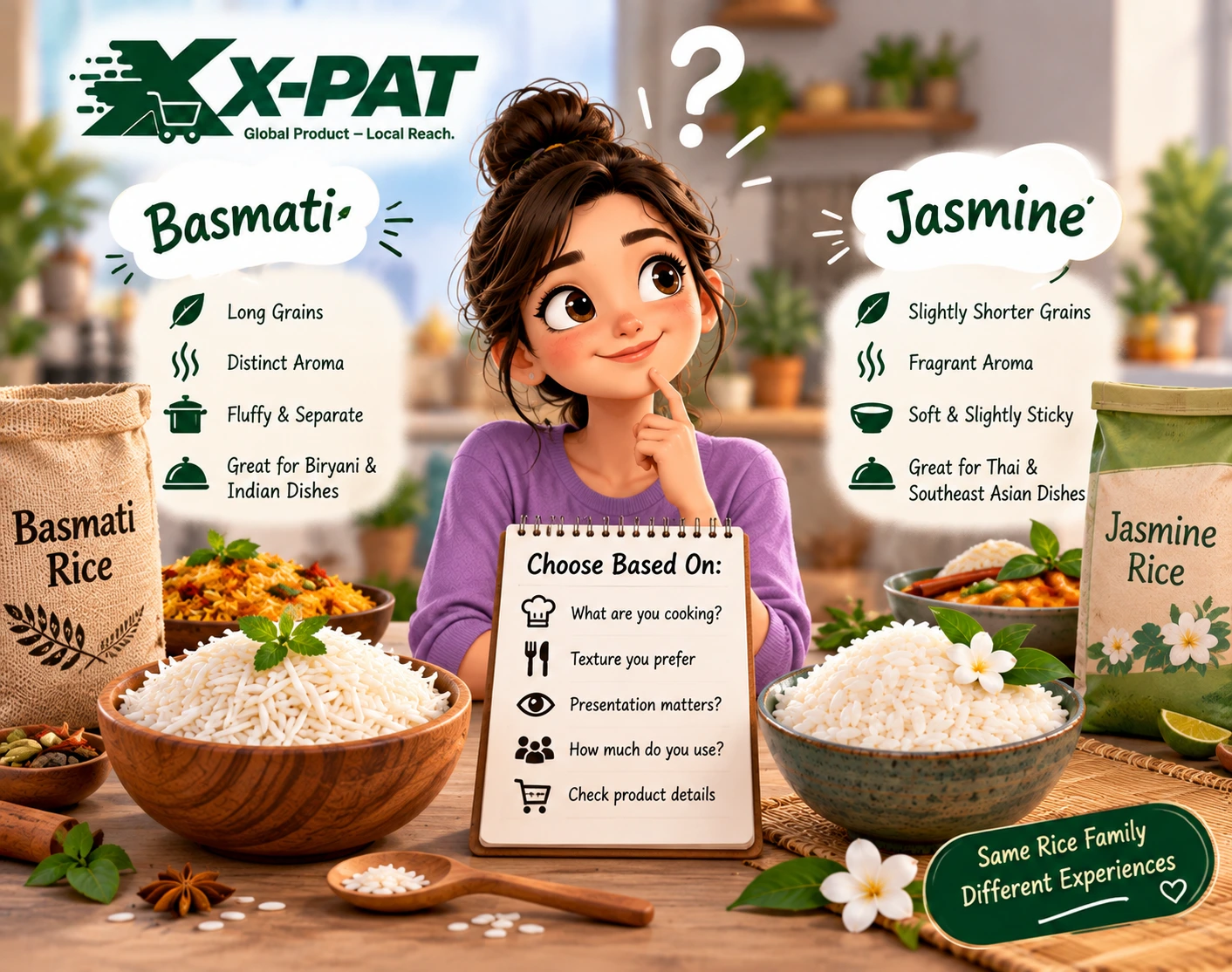
How Should You Choose Between Basmati and Jasmine Rice?
Before buying your next pack, ask yourself five simple questions.
- What are you cooking?
For biryani or pulao, consider basmati. For Thai curry or Southeast Asian-style dishes, jasmine is often the natural match. - What texture do you want?
Choose basmati when you want fluffy, separate grains. Consider jasmine when you prefer softer, slightly sticky rice. - How important is grain presentation?
For a visually impressive rice dish, long-grain basmati can make a noticeable difference. - How much rice do you use?
Choose a pack size that fits your household consumption instead of automatically buying the largest bag. - Have you checked the product details?
Look at the variety, net weight, cooking instructions and any ageing information before purchasing.
This five-question approach makes choosing rice much easier.
What Should Shoppers in Ghana Check When Buying Rice Online?
When purchasing basmati rice online in Ghana or looking at jasmine rice options, don’t rely only on the product photo.
Check the full product listing.
Look for the exact rice type, brand, pack weight and product description. Compare the price with the pack size, and check whether delivery is available for your location.
For imported groceries, current availability can change, so live product information is more reliable than an old price or stock claim in a blog.
If you’re using online grocery shopping in Ghana, it can also make sense to combine your rice purchase with other pantry products such as spices, lentils, flour, cooking oil, snacks and household essentials.
That turns a single rice purchase into a more efficient grocery order.
How Can X-PAT Help You Explore Indian Grocery Options in Ghana?
For shoppers looking for Indian grocery products in Ghana, X-PAT provides a convenient digital place to explore available grocery options.
Instead of searching across multiple physical locations for individual ingredients, customers can check the current X-PAT catalogue for available rice and other grocery essentials.
For an Indian-style meal, your basket might include rice alongside:
- Pulses and lentils
- Spices and masalas
- Flour
- Cooking essentials
- Snacks
- Beverages
- Everyday FMCG products
Because stock and delivery conditions can change, always check the current product listing and checkout information before placing an order.
The Right Rice Starts with the Right Meal
The choice between basmati and jasmine rice becomes much simpler once you stop asking which rice is universally “better.”
Think about the meal.
For biryani, pulao and many Indian dishes, basmati’s elongated, relatively separate grains can provide the texture and presentation you’re looking for. For Thai curries, stir-fries and Southeast Asian dishes, jasmine rice’s softer and slightly stickier texture can be a natural fit.
When shopping online, compare the rice variety, grain characteristics, pack size and current product information rather than choosing by packaging alone.
And if you’re exploring Indian groceries in Ghana, check X-PAT current selection to build the complete meal—from rice and spices to pantry and household essentials.
Choose the rice that fits your recipe—and make every grain count.
Faq
What is the main difference between basmati rice and jasmine rice?
The main differences are grain shape, aroma and cooked texture. Basmati generally produces longer, fluffy and relatively separate grains, while jasmine rice is typically softer, moister and slightly stickier.
Is basmati rice the same as jasmine rice?
No. Both are aromatic long-grain rice varieties, but they are different types of rice with different traditional origins, aromas, grain characteristics and cooking textures.
Which is better for biryani: basmati or jasmine rice?
Basmati is generally the more suitable choice for traditional biryani because long, separated grains are an important characteristic of the dish.
Can I use jasmine rice instead of basmati?
Yes, for some everyday meals, but the texture and aroma will be different. For rice-focused recipes such as biryani, using the rice specified in the recipe usually gives a result closer to the intended dish.
Which rice is better with Indian curry?
Basmati is commonly paired with Indian curries because its aromatic character and relatively separate grains complement many Indian dishes. Personal preference can still determine which rice you enjoy most.